



Miguel Gonzalez Quintanilla, Abbie Riley and Nathan Blazel
Since 1932, the International Olympic Committee has provided lodging for Olympic athletes in the respective host cities. With the development of permanent structures within Olympic Villages, evaluations have focused on the best post-occupancy use of these built campuses, with some positively affecting host cities and others having detrimental effects.
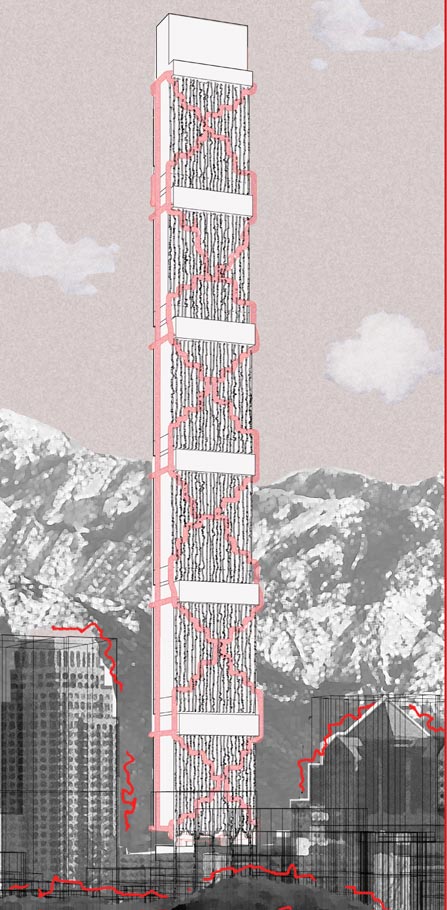
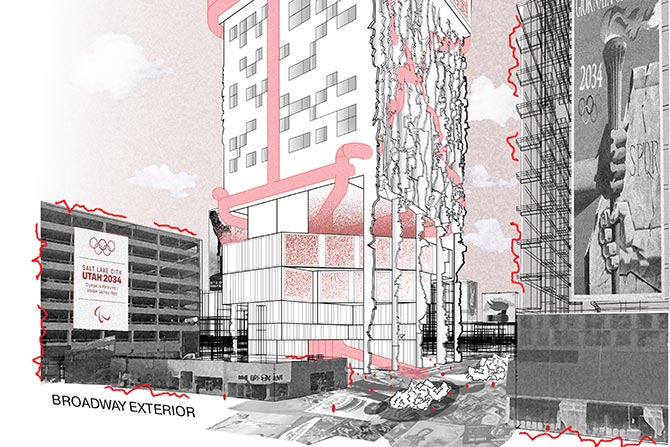
Altius Tower, designed for Salt Lake City’s 2034 Winter Olympics, is an innovation in Olympic villages, city connections and vertical transportation in supertall structures. As the Salt Lake City metropolitan area continues to grow, shortages in both densification and affordability are rising exponentially. Altius Tower’s post-legacy use aims to address this issue by transferring its full 1,612 units and amenities, totaling 1.4 million square feet and spanning 1,752 vertical feet, to the city for affordable housing and public recreation.
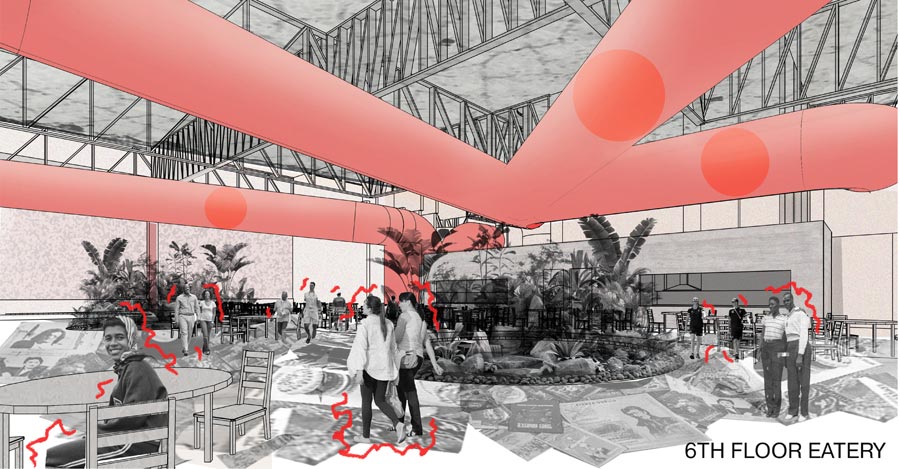
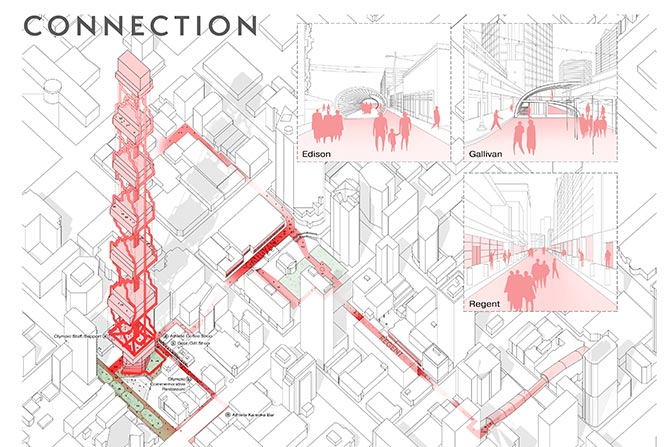
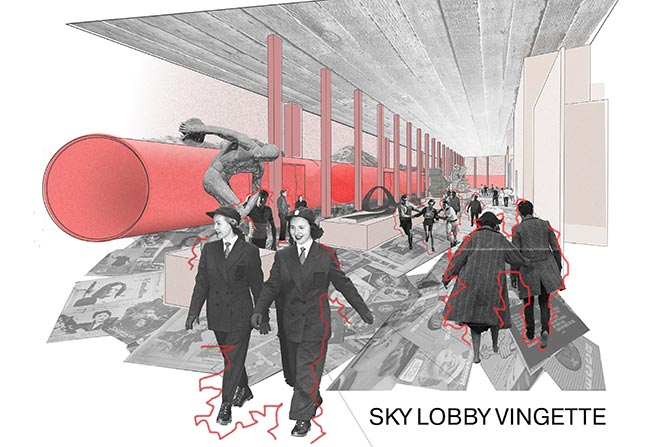
Its mix of studio, one-, two- and three-bedroom apartments throughout allows for demographic diversity within the “vertical city.” Amenity spaces are also spread throughout the skyscraper to create “neighborhood pockets” for both its residents and the public. It was important not to alienate the rest of downtown, leading to a design approach that connected the existing ground-floor mid-blocks to the tower’s amenities.
Located on Edison Street, a culturally and historically rich midblock, the tower activates and creates a micro-climate within the car-centric streets of downtown Salt Lake City. Altius Tower acts as a gate, drawing the public from the large macro-scale blocks to a micro-scale community experience filled with diversity and rich history.
Altius Tower also speculates on the potential of matching the nomenclature of “vertical cities” with a vertical transit system. The transit tubes winding through the tower’s exterior allow users to take in the majestic views of the mountains and the valley, and bring a playful element to the area that is sure to draw many in.