



Fatema Udaipurwala
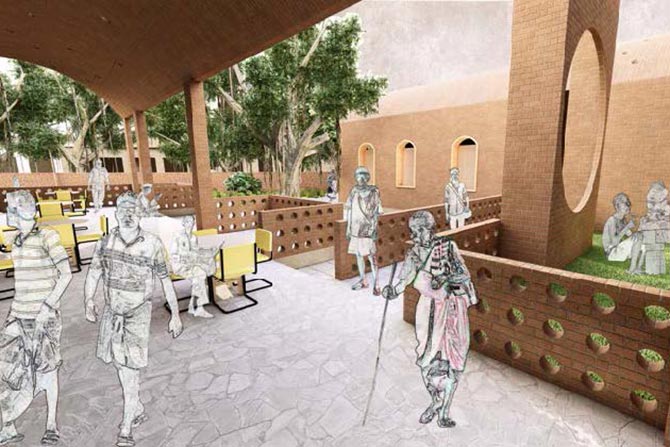
Across the Punjab region of India, pervasive drug addiction poses a serious threat. This project envisions addressing this pressing concern through a comprehensive drug rehabilitation and educational center in Amritsar. The design is intended to offer a holistic route to recovery, encourage community reintegration and, importantly, equip young males with the knowledge to make informed decisions through focused education.
The prevalence of drug use in Punjab, particularly among adult males aged 18-45, is very high, leading to fractured families, economic stagnation and strained community resources. The design aims to provide a sanctuary for healing and a foundation for drug-free lives, while also incorporating a dedicated educational wing for boys aged 7-16 to help break the cycle of addiction through early awareness.
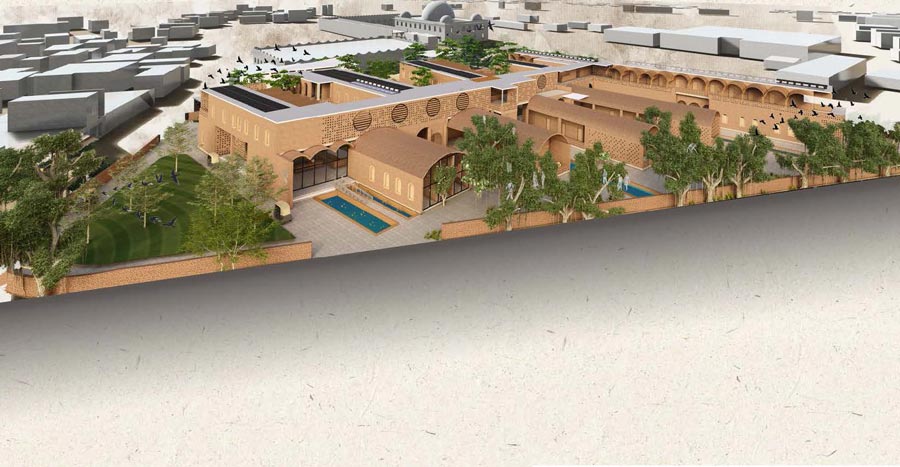
The center’s gross square footage is approximately 50,000 square feet to accommodate various functions, including inpatient/outpatient care, educational facilities and living quarters. The building’s conceptual development is rooted in “Pathways to Recovery,” encompassing spirituality, relaxation, care and rejuvenation, with massing inspired by adjacent buildings and reflecting these distinct phases.
The site in Amritsar offers dual accessibility: it’s close to urban amenities and transportation for city residents, and it also provides easy access for individuals from surrounding rural villages. Amritsar’s unique advantages include proximity to a revered temple complex for spiritual solace, a major railway station within two miles for regional access, and a nearby hospital for crucial medical support.
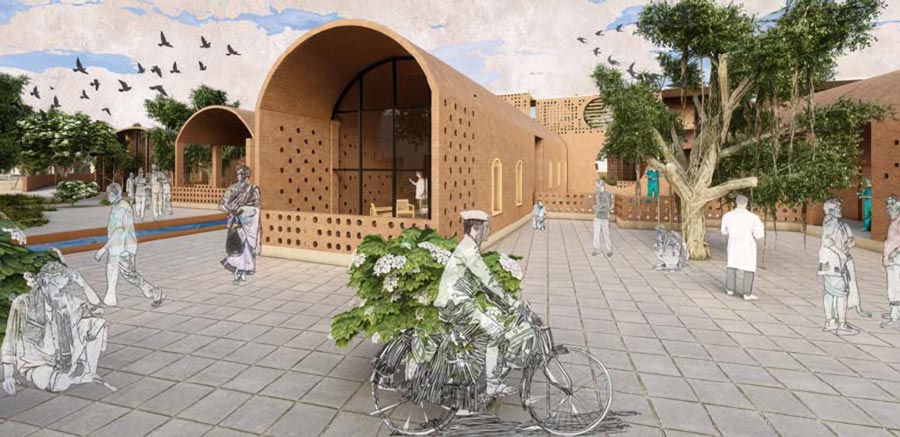
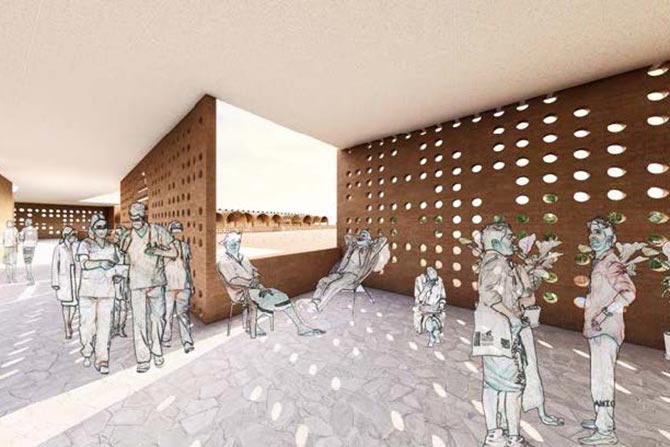
Amritsar falls within a hot, dry climate zone with little humidity during the monsoon months. Climate-responsive design incorporates water bodies on the west and east for evaporative cooling and linear building forms for natural ventilation, ensuring contextual harmony with both the temple and surrounding architecture.