

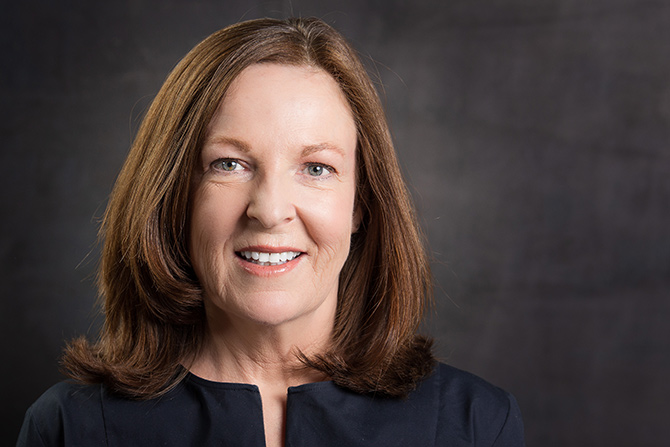

As part of our ongoing series of interviews with architectural legends, we are proud to present this interview with Anne Mooney. It was a pleasure to interview her and to learn more about all the contributions she has made to the industry. This interview has been edited for length and clarity.
Beginnings
When did you decide to become an architect?
I was in college. I had never met an architect; I had no architects in my family or in my familiar world. I studied lots of different subjects throughout my education, searching for that thing that was going to be my professional direction, something I was passionate about. I took classes in psychology, sociology and philosophy, and I ended up with a business degree sort of by default.
Then I took a class in architecture, and it changed my life. Tom Kass at the University of Utah taught a lot of our Utah architects. His colleague, Gail Della-Piana, was my professor. She really did change my life. I remember sitting in the studio drawing a detail of the rose window of the Cathedral of the Madeleine. I worked on just that for hours and then days. She really taught me how to see things in a completely new way. I knew it would inform my direction.
This was in the 1980s, and I was well into my education, so I couldn’t switch to architecture. At that time, Utah just had a graduate program. So, I finished my degree in business and then I immediately started pursuing architecture. I moved to Los Angeles and started taking night classes at UCLA. I took a course at the Southern California Institute of Architecture, titled “Making and Meaning” with Gary Paige, to build my portfolio.
Gary Paige taught us that architecture was walking around with your eyes open. That didn’t make sense to me at the time, but after practicing architecture for decades, I realized this is what architecture is about. It’s about paying attention and noticing details in our environment. The most important skill we have as architects is to really listen, pay attention and notice things, and then translate that into architecture.
My portfolio, at the time, was all handmade. I made the paper in my portfolio in a Japanese paper-making class. I used roofing tar paper for the cover and then delivered it to different graduate schools. I thought living in New York would be a completely different experience for someone who grew up in the West, in Montana, Utah and California. I went to Columbia in New York to study. The school was great, and living in proximity to all those cultural resources was fantastic, but I also learned that I didn’t want to live in New York or on the East Coast. I’m not a big-city person, or at least not an East Coast big-city person.
I finished my education at the Southern California Institute of Architecture and was fortunate to study with some amazing architects who really helped me launch my career. I also went to Switzerland to study, which I loved, because its mountains and contextual architecture are similar to those found in the American West. I loved every second of being an architecture student.
One of my professors at SCI-Arc was Eric Owen Moss. I took an incredible studio with him, which I really enjoyed. I think he enjoyed having me as a student. I got a job in his Culver City office, where I did my internship. It was a lot like being in school, which was fun. It was very intense and immersive. We worked on projects in Culver City, but we also worked on competitions all around the world. I learned the technical aspects of architecture, like how to detail buildings, and my interest in materials was sharpened in that studio. The best thing was that it wasn’t all paper architecture. We could walk out the door and see our designs being produced down the street. I primarily worked on construction documents under the guidance of some very talented architects. AutoCAD was coming onto the scene. I started by hand-drafting and then transitioned to AutoCAD for our technical documents on notable projects, such as the Samitaur Building in Culver City. We also designed a unique experimental performance space for the Los Angeles Philharmonic that featured warped glass planes.
When I was in school, a professor said, “You would be a good teacher; would you like to pursue that?” I said, “Sure,” and became a teaching assistant for an undergraduate design studio. I also began teaching in the summers, as well as in after-school programs for elementary school children in Los Angeles through the Vitruvius program, where we introduced young children to architecture. I didn’t see myself in front of large lecture rooms and classrooms, but I realized that I could get people excited about architecture in the same way that Gail Della-Piana had gotten me excited about architecture. Since then, I have maintained a dual career in architectural practice and teaching.
Private Practice
Let’s talk about the evolution of your career.
My partner and husband, John Sparano, and I decided to start a practice in Los Angeles. We started it in our apartment, and it has grown steadily over the years. We have a practice of nearly 20 people across two states, operating in the western region of the United States. We’re generalist architects, and we’ve always wanted to be generalists. We don’t specialize in a particular typology, and that is really strategic. It might be a better business strategy to focus on one project type, but this way, we get to learn things from different typologies and apply them. We are a well-rounded team of architects in our office, and no one is ever bored with doing the same thing over and over again.
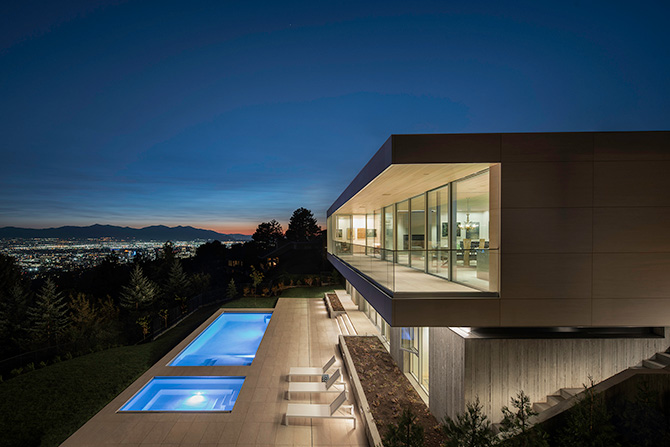
From the very beginning, we’ve worked on public projects. We had a very early commission for a community center in a public park. We also work on arts and culture projects, and we consistently include single-family residences in our practice. We like to keep a couple of houses in the office because they remind us of the importance of the individual human experience and how important a home is in someone’s life.
When and why did you decide to open a practice?
It is a challenging business decision and kind of scary to open your own practice. It’s risky. I think the main reason I wanted to start a practice is that I would have more flexibility with my time. I knew that I wanted to have a family, and I think that would have been very difficult working in the intense architecture environment I was in. When I first started, I felt that teaching was important too, because it would provide me with more stability and benefits. Of course, we now offer these things in our office, but at the time, I was depending on my teaching position for that. It provided a steady income to balance the fluctuations of an emerging practice.
There are always challenges to running a business. In the early days, it was about financial stability, hiring carefully and then growing carefully. We still think about that: financial sustainability by growing at a very careful rate. We’re proud to say that we’ve never laid anybody off in all the years of our practice. We don’t hire and fire. We don’t expand and contract with projects. We would rather not hire somebody if we don’t have a role for them long-term.
We’ve always worked in the public sector because we knew that our clients would pay. They often take a long time, but their checks don’t bounce, and they pay regularly. When we were starting out in Los Angeles, the dot-com industry was expanding and then crashing. We saw many architects who were dependent on those projects go out of business.
Talk about your decision to come to Utah.
We decided to open a second office in Utah about 10 years into our Los Angeles practice. It really aligned with when I had my children. At the time, we weren’t sure if there would be work here, so we naturally continued working in Los Angeles. There was a lot of commuting. At the time, people weren’t really working as we do now, anywhere in the world. The public projects were more challenging to break into in the Utah market, so we began with more private sector work. We were well-established with public sector projects in Los Angeles, so it was a nice balance. There’s a benefit to being in two markets, as if the economy slows in one, we can stabilize it with the other.
Is there anything you would have done differently?
One of my early mentors, Norberto Martinez, said, “When you have your own business, the highs are much higher, but the lows are much lower.” I think that’s true. When you’re working in a large firm, sometimes you don’t even understand the lows because they’re shielded from employees, and hopefully, the highs are shared with everybody. There are inevitable lows and disappointments. However, sometimes things are beyond our control, such as the economy. Sometimes we don’t get projects that we really wanted to land, and those disappointments are just part of running a business and being an architect.
How do you structure the responsibilities in your firm?
We have a small practice; everyone does a little of everything. We have project managers who are architects who run the day-to-day, and then they have a team of junior people supporting them. People work on projects from conceptual development through production, delivery and construction. We have one team that follows the project all the way through. That has been really successful for us. The team likes it because they get to be involved every step of the way. We try to mix up the project sizes, stress loads and typologies so that people have a good variety of things to work on. We have some business professionals who run our office, including a wonderful studio manager, and John and I are very involved in business decisions. We also now have two partners. One of our partners has been with us for 27 years. We have one partner in Los Angeles and one in Salt Lake City.
What are some of your favorite projects?
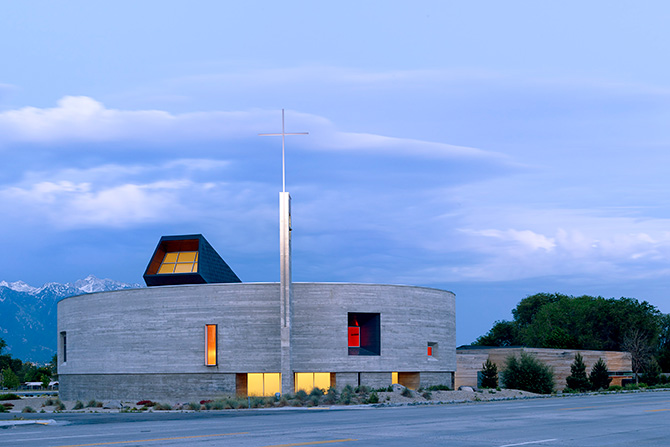
My favorite project is always the one that I’m currently working on, and we’re working on really incredible projects right now. If you had asked me that question five years ago, I think I would have said the same thing: that I’m working on amazing projects. I feel really lucky that we have been able to work on extraordinary projects consistently. Anything that affects a large community is important to us. There are community centers that we’ve done, like St. Joseph the Worker Catholic Church, that impact a large community. The museums, arts and cultural projects are important because they improve the quality of life for the communities we serve.
The Profession: Changes, Challenges and Insights
How has the profession evolved since you were in school in the ‘80s?
Technology has been a positive thing. It’s made our offices more efficient, and we can produce things quickly. I think one of my jobs is to slow us down a little bit. Technology is all about speeding things up and making things fast, fast, fast. However, we also want to be thoughtful, and that means taking a more thoughtful approach to design and problem-solving. I think a balance of analog and digital is essential, and it’s something we incorporate in all of our projects. We still build physical models. I think we’re one of the few firms that still do that.
We, of course, build everything in digital form as well and produce our construction documents using BIM. However, those analog starts are crucial in the way we communicate with our clients. Reading drawings can be confusing, so physical models and hand-drawn sketches remain powerful tools that architects can bring to the table.
I am optimistic about what AI will bring to architecture, but I don’t think AI will ever replace architects. It might replace architects for clients that you might not want to work with anyway, if they’re just interested in reproducing things that already exist and can be copied. I think the value of an architect lies in developing something site-specific, program-specific and client-specific; you need an architect to put all those pieces together.
Some women in the field feel that they entered school at a disadvantage because many men had construction experience. Does that ring true for you?
I come from an aviation family. My father, his brothers and my grandfather were all pilots. My sister became a flight attendant, my brother an aircraft mechanic. I had no construction background and had no opportunities to take drafting in high school. I don’t even know if that would have been on my radar in high school, but it wasn’t even offered.
I had a steep learning curve when I started school. I had a lot to learn, but I was also really interested in learning every single aspect of architecture: the design perspective, the technology, the construction, the constructability aspect and the human factors. All of it was interesting to me. I had never worked on construction sites until we started building our own projects.
When I started, there were very few women in my classes. In the class I took with Eric Moss, there were 18 of us; I was one of two women and two Americans. There were people from all over the world studying there. When I started working, there were only two women in the office out of about 25 people. I think that is changing now. In school, there’s more gender parity. I think there might be slightly more women in architecture schools than men currently. However, over time, they often drop out of the field, which is unfortunate.
The challenge, even to this day, is that people don’t always see me as an architect. When I go to a construction site, they talk to one of the guys I’m with. It is what it is. I think there still is an image of what an architect looks like, and it’s not a woman. I hope that changes. I think it will change. There are many great female architects in this country and around the world. I believe there are role models now that didn’t exist in the past. It’s just a slow change. I think women bring a lot to the field; they bring a different perspective. They contribute to the conversations in a different way.
What would you tell a young architect today?
I would tell young architects to be patient. I think people want to get out of school and immediately become a superstar, earning great commissions. Frank Gehry was the commencement speaker at my graduation from SCI-Arc. He said, “Beware of early success,” and that was a valuable message to hear, because we all want to achieve early success. We all want to make a name for ourselves in our field, but architecture is a profession that requires patience and steady progression. Every project, no matter how small, matters. Success might not happen right away, but if you’re patient and do good work, those things will pay off.
Is there anything different you would tell a young female architect from a young male architect?
Young men often want to get licensed immediately, which wasn’t as important to me when I was that age. But when I got licensed, I could call myself an architect. Ultimately, I do think it’s important, especially for women, to be able to say, “I’m an architect,” not “I’m an architectural designer or an intern or whatever.” Being able to say “I’m an architect” is significant.
I feel so blessed that I found this field. I think it’s something that really has a lot to offer the world. It’s a wonderful way to make a living and spend your days.