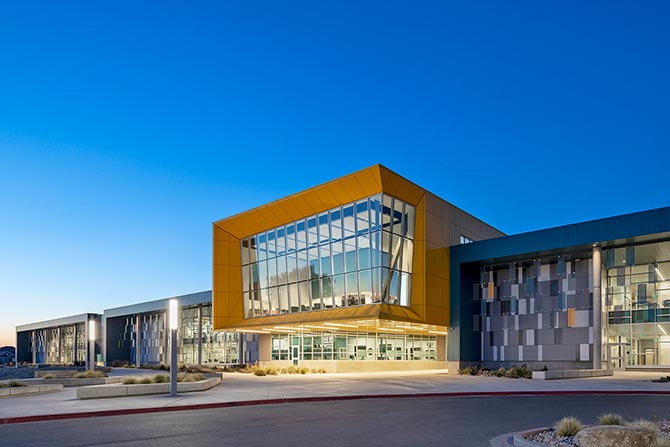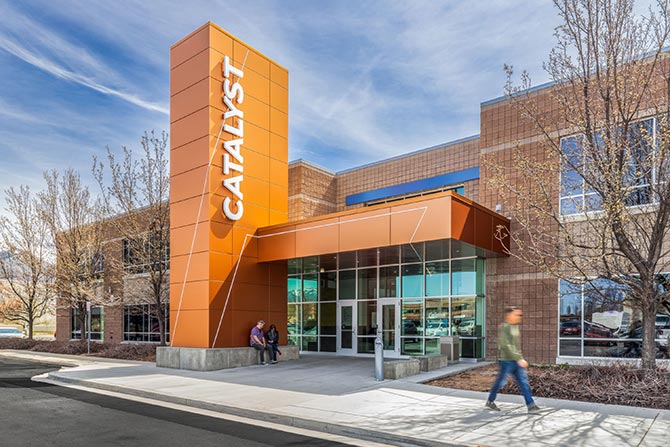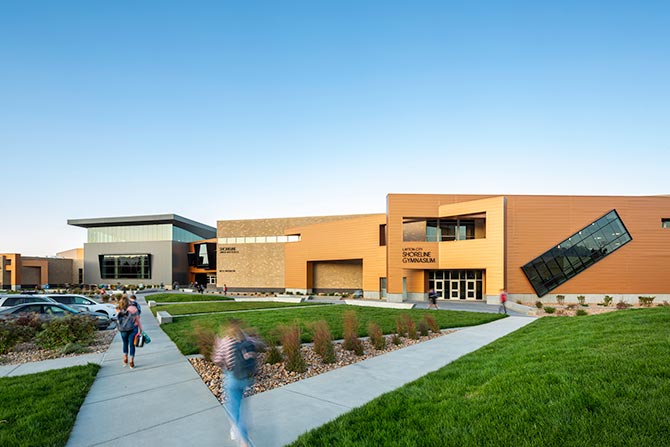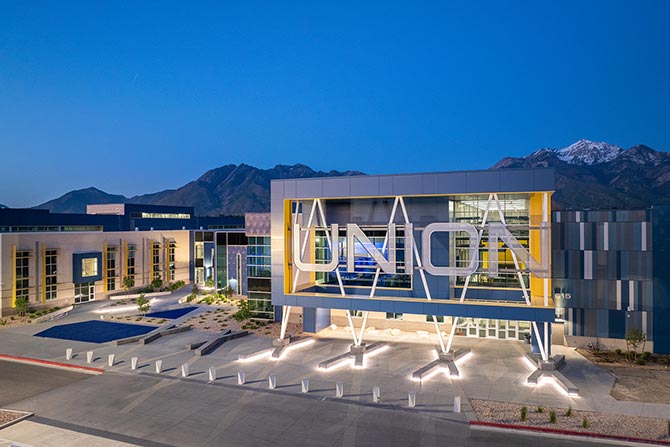



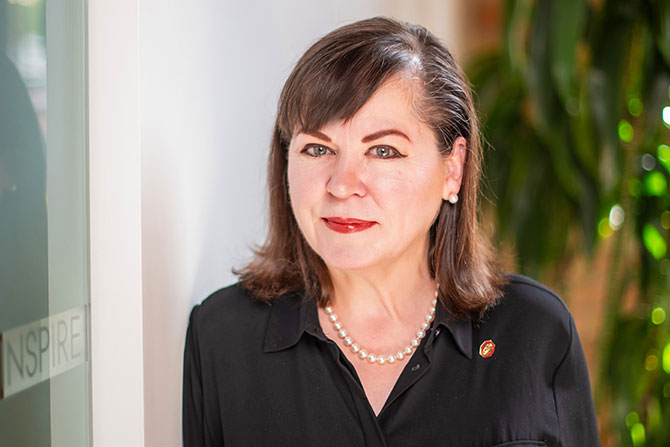

As part of our ongoing series of interviews with architectural legends, we are proud to present this interview with Jeanne Jackson, FAIA, NCARB, LEED AP. Over the course of her remarkable career, she has led the design of diverse projects, including multiple award-winning schools, among them a recipient of the James D. MacConnell Award from the Association for Learning Environments (A4LE). It was a pleasure to interview her and to learn more about her journey as an architect and all the contributions she has made to the industry. This interview has been edited for length and clarity.
When did you decide to become an architect?
I was a senior in high school. The only architect I knew as a kid was Bob Brady from The Brady Bunch. I didn’t really know what architects did, but, looking back, from the time I was little, I was redesigning every room I was in in my head. Originally, I thought of doing interior design, but then I was exposed to the School of Architecture at the University of Utah. I thought, “Why wouldn’t I want to design the whole thing?”
Tell us about that educational experience.
I went to the University of Utah after 12 years of catholic school. I had an “Honors at Entrance” scholarship to the U. My parents thought that it was nice for me to go for free. Of course, everybody wants to go away to school, but my option was to go to the U. In those days, there was no four plus two program; you had to get a Master of Architecture, and it was a three-year master’s program. I spent seven years and got both my degrees there. Then, in 1990, I graduated from school during the worst recession we had seen in many years.
There were no jobs. I asked many of the architects that I had come in contact with during my education if I could interview with them. Several were very nice; they were not hiring, but said I could come in for an interview.
Meanwhile, I looked at the help-wanted ads in the newspaper. About two or three weeks after I graduated, there was an ad for an architect (which I wasn’t, of course). I applied and got an interview. It was Valentiner Architects, and they had never hired an intern before, so they weren’t sure if that was a good idea. There were 23 people there at the time. After about three weeks, I got an offer. I went there and they have treated me very well throughout my career.
Niels Valentiner, the founder of the company, was completely interested in hiring anybody who was good. He didn’t care if they were an immigrant or a woman. I never had to ask for a promotion or a raise or anything. Within about 10 years, I was asked to be a partner. Once you’re asked to be a partner, you’re there, and I’ve been there 35 years.
What was your focus?
It’s really interesting to think back about what my focus might have been. I had worked for Brixen and Christopher one summer and as a structural engineer the summer before. I guess I didn’t really know.
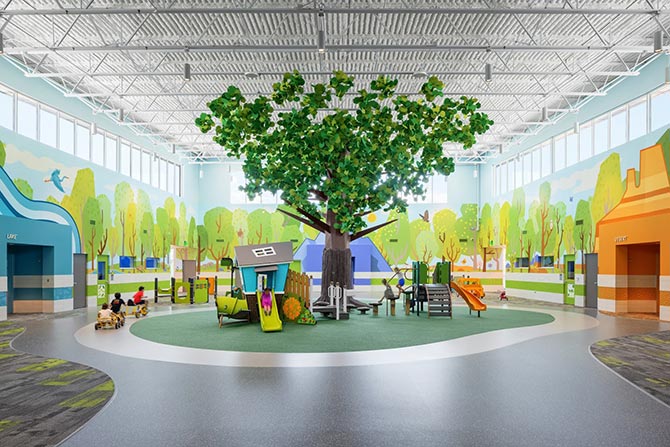
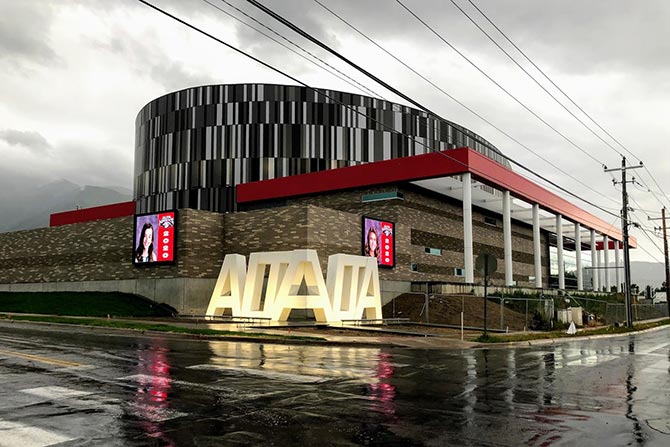
In school, you do a variety of design projects. I got to Valentiner, and they didn’t have a lot of work either. One of my first assignments was to make a plastic model of One Utah Center. I hated making models, but I did it. Then I worked with whoever had a job at the firm. I worked on the Jordan School District and the Alpine School District prototypes. I worked on Northridge High School as a first-year drafter. Now we have employees who went there, which is hilarious. I worked on the Murray Ice Sheet, which is now called County Ice Center. I worked on the West Valley City Recreation Center. I worked on whatever there was, but I always loved schools and got along very well with the two partners in the office who did schools: Boyd McAllister, AIA, and Steve Crane, FAIA. They gave me a lot of opportunities.
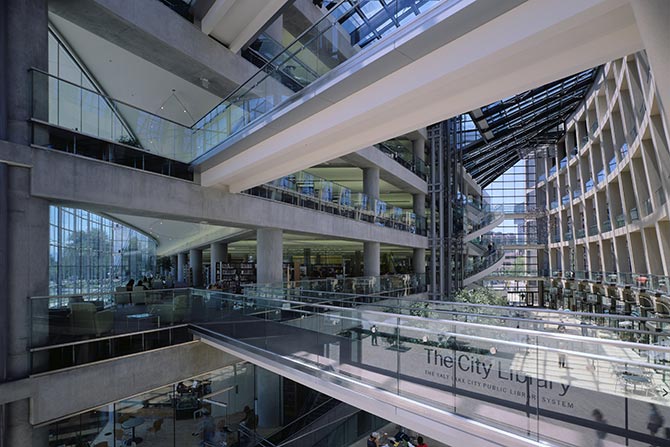
I also love libraries because I’ve always loved to read books, so I worked on the Salt Lake City Public Library, which was a life-changing experience. I got to know Moshe Safdie, FAIA. He’s an amazing human, a wonderful teacher and a wonderful architect. By the time I finished that project, I was never afraid to detail anything, which is fun because, in school, they don’t teach you how to detail.
What did you learn in school?
Architectural history. That was my favorite class — the thing I did the best in. It was the first time I had a history class that was worth anything. It’s super ironic that I ended up designing schools because I literally hated school. I hated every minute of school from first grade through my master’s. It was super boring. My mother taught me to take a book and put it on my lap under the desk and read because I was so bored. I did like geometry. That, I guess, is a telling sign. I liked English a lot. I originally thought that I might get an English degree, and then I thought, “I don’t know what to do with that.”
Where did you learn to draft?
I didn’t really. I just did my best in architecture school. No one taught us anything about drafting.
Had you moved into AutoCAD at that point?
No. At the U, there was a computer room, and you could go down and enter coordinates. I made a wireframe model of my thesis project, which was a housing project, so that I could overlay it and draw the building in 3D. After about eight months at Valentiner, I started working on the computer there. They were pretty early adopters. It wasn’t AutoCAD; it was a digitizer pad with a little pen. I was the queen of that; I was so fast at it. And then we got AutoCAD, which was a little adjustment. I became the queen of that, even to the point that, as a partner, I was still designing in AutoCAD because I knew that software. Then we switched to Revit. I was totally in favor of it but didn’t work in it enough to really be able to learn to use Revit effectively. I think it’s an incredible tool.
Talk about some of the projects that taught you about architecture.
The client relationship part of a job is the best part. I love finding out what they need, but I also feel like I’ve educated myself about the process of K-12 education. It’s part of my job to open the minds of teachers. I don’t want to just hear how they teach or how their classroom could be better. I want to talk about how you imagine teaching in your wildest dreams: “What if you had no parameters?” How can we make the building facilitate that kind of teaching paradigm?
All of the schools used to be — and many in this country still are — what we call “cells and bells”: a hallway with classroom, classroom, classroom, classroom. The kids go into those classrooms and get education shoved into their little heads. That isn’t the best way to learn because the best way is different for everyone.
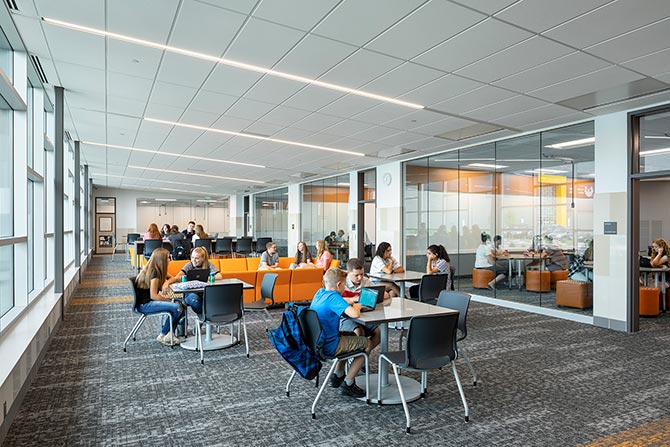
Fortunately, many of the schools of education are starting to teach teachers that small group work, collaboration, individual work and a variety of different scenarios and places, still including direct instruction, is a better way for kids to learn. Students get excited about it. They can learn from each other, teach each other. Once you can teach someone else, that means you’ve mastered it. We design an environment where there are student collaborative areas outside the classrooms. The key to that is having glass or an opening so the teacher can monitor them. Some kids are working in the classroom, some are working in collaboration, and some are being tutored by either an adult or their peers. One of the most wonderful things in my career is that I go to my schools and see young people who love school, unlike my experience.
One of the best things that my mentors did was invite me to join them in some of the groups, like the AIA Committee on Architecture for Education. We would go to one or two conferences a year. You’d see what everyone else is doing across the country, and sometimes you learn you don’t want to do that. And sometimes, you think “That’s really working. We could do that. And how can we make it even better?” We realized, “Yeah, we’re doing everything pretty good, but we need collaboration.” We added that, and then we thought, “But the furniture is just no good.”
At Davis School District, which is a good steward of children’s education, we did an experiment. We took everybody’s temperature, asking, “How do you like what you’re using? How does it limit you?” Then they got test classroom furniture. After using the furniture for a month, they got the same questions. It drastically changed the way furniture was being purchased in that district.
In 2006, I went to a presentation by Ed Mazria, FAIA. He challenged us by saying that the only people who are going to save us from climate change are architects. I went back to my partners and shared some of this, and I said, “How about we stop asking our clients about the things that are a no-brainer?” People would ask their clients, “Do you want us to specify low VOC paint?” I said, “Let’s stop doing that kind of thing. Just specify low VOC paint. They don’t care, but it makes a difference.” So, VCBO started to be more sustainable.
How did you negotiate the budget to accommodate sustainability?
There is a first cost versus a lifecycle cost that you have to look at. If you think about it, who builds a building that they own forever? School districts, universities and the government. If anybody should know how to save money by making the right decisions, it’s those people. In Utah, all the school districts have a good understanding of how to invest the right amount of money. They’re actually getting a very good value for what they spend.
I designed the only two buildings in Utah that are Department of Energy-certified net zero. They’re both schools. Our client went to the same conferences we went to in the Pacific Northwest. We saw that the people there are very good at sustainability. Davis School District said, “I think we should do that. That’s our goal with our next prototype.” Around 2009, we were hired to do their new prototype. We changed the original elementary prototype that we first did in 1997.
We did a lot of research. What we learned is, weirdly, it doesn’t have to cost more. It is the choices that you make. If you want brick and net zero, you probably can’t have it. If you don’t mind using CMU, that’s a way to save some money to put toward the rest of the building. To create a building like that, you have to improve the envelope. We started doing spray foam insulation. I asked my consultants, “How can we do this better?” We couldn’t build it the way we used to build it. We started the building with CMU as we always had, and then held the metal studs off a couple of inches and used spray foam insulation, so there was no thermal bridging. Then we looked at a lot of different little things we could do. LED lighting had just come in. So, you do all LED lighting. You look at daylight harvesting, so when you have a sunny day, you can have the lights off or lower the brightness.
One of the most important keys to our first net-zero building was the geothermal wellfield. The ground was suitable. Its direct/indirect cooling was basically free, and there was PV on the roof. We had a goal of an EUI of 20 on the first building, Odyssey Elementary. During the first year of operation, we had a measured EUI of 17.3, which is astonishing. The school district hadn’t bought into the PV, so it didn’t have PV on the roof. We met with the school board, and showed them the stats and said, “In about 14 years, you will have paid for those PV panels because you’re saving that much energy. And that’s assuming energy costs don’t go up, which they will.” The school board members looked at each other and said, “Why wouldn’t we do that?” It was expensive in 2013: $750,000. We still figured it would pay for itself that soon. Odyssey is also LEED Gold certified.
We just opened a school prototype last year, and we have one finishing for a school opening in August. The PV for that roof is like $250,000. It’s gone down drastically. People have asked our client, Brian Turner, FAIA, “How long does it take to pay back?” He said, “I figure it’s the first day because our electric bills go down and we would have been paying them. What does it matter for the next hundred years? We’re not going to have electrical bills.”
What changes have you experienced in the industry, particularly as a woman?
It wasn’t always easy, but I guess I never thought too much about being a woman in this industry, even though there weren’t very many women. That was probably based on my parents’ support. My dad was an electrical engineer, and he’d always say, “You know, Jeanne, you can be anything you want to be.” And I said, “Yeah, I know that, Dad.” It took me years to figure out why he told me that. When I told him I was going to be an architect, he said, “Don’t you think you’re too smart for that?” I still laugh about that.
I was very fortunate because I got out of school at age 24. I got my license before I was 27. I was very hung up on being able to say I’m an architect. It was very big for me. As soon as I was licensed, my mentors would take me to meet the principal and say, “This is Jeanne Jackson, she’ll be your architect.” Once, a client said, “Are you a real architect?” I said, “Yes, I’m a licensed architect.” I know I looked very young. I had superintendents on my jobs who were mostly respectful, amazingly. Many times, my mentors would come with me, but sometimes they didn’t.
Once at a job site after my weekly meeting, I had to use the restroom. I said, “Hey, before I walk around the site, is there a restroom I can use?” This is how naive I was. He goes, “Yes, get in your car. Drive down the street about half a mile, and there’s a Taco Bell.” He didn’t want me to see the scary portable restrooms with all the graffiti. The job site was so different in the olden days; you would go in there, and there’d be girlie calendars. Now you go into the job site trailer, and they’re talking about their kids. The whole industry, I think, has gotten more the way it ought to be — it ought to be about building a great building.
You said it wasn’t always easy.
The first few years were hard. I didn’t know enough. I’d be sitting there trying to figure out how to do a door detail — we had a binder of standard details. I would finish, and because the partner I was working with might not be there, I’d be thinking, “Now I’m not sure what to do.” Frankly, when you’re right out of school, it’s a little bit of a mystery. Also, I just didn’t know that much about construction, to be honest. I went to a college prep school, so there were no drafting or construction classes. I learned how to do a lot of stuff from my dad. He was a do-it-yourselfer, but it wasn’t like building a house.
Today, it’s a lot different. The U has some good hands-on classes where you can go do some construction. Also, we take junior staff to a job site and point out stuff to them. I think it’s a different world. It’s an investment. You take that young person to the job site, introduce them to your client and, pretty soon, they’re creating a relationship.
It’s a plan to grow people, to help them advance. Everybody is not going to be a partner, but maybe everybody doesn’t want to be. Everybody should be able to fulfill their dreams. I’ve tried to mentor women, specifically, but I don’t stick to that. I’m happy to mentor any young people on my team. Actually, six of my partners started their professional life on my team.
Talk to me about your long history of working in professional organizations.
I was working my butt off designing schools and seeing them through construction. One day, I thought, “I love this, but I think there’s more.” Right then, AIA Utah was having elections, and I decided I was going to run for treasurer. I did. And I won. So, I was the treasurer of AIA Utah and started to meet people. They were looking for someone to serve on the Utah Licensing Board. I submitted my application, got picked and served two four-year terms. I was a chair for most of those years.
So, in 2006, I got involved with the National Council of Architectural Registration Boards (NCARB). Immediately, I became part of leadership. Over 15 years, I was involved in several committees and chaired a number of them. I led the Western Mountain Region for NCARB. I loved working with NCARB because we advanced our profession. For example, I was on the committee that eliminated volunteer work as part of the IDP (now AXP). I also spent four years with a group rewriting the national model licensing law, which is a model for all jurisdictions on how architectural licensing works.
I was also involved with the AIA Committee on Architecture for Education. I started to go to their conferences, met all the people there and was asked to join the advisory committee. It is a path: You are added to the committee, and six years later, you’re the chair. I think we did a lot of good; I have lifelong friends all over the country from that experience.
It takes an enormous amount of time to invest in professional organizations. How do you offset that with your billable hours?
It is a lot of time. I have always worked a lot of hours, but I didn’t have children, so I had extra time to spend on the nights and weekends. I was also supported by my partners to do that kind of volunteer work. I always got my work done, but I got to do all of this other stuff that expanded my knowledge of the profession. I started doing presentations nationally, talking about what we’ve done with schools. One of my partners said, “Why do you give away all our secrets?” I said, “I wouldn’t do it if I thought that I could design every school in this country, but I can’t, and we’re not going to get all those jobs. And if we did, we probably couldn’t do them. But it doesn’t mean that all the kids don’t deserve to have a better learning environment. I want to share that knowledge so that children can learn more effectively.”
You also learn how people run their businesses, which is really good for your office, and I’ve shared information. We’ve had a succession plan that Niels Valentiner put into effect before I became a partner. Most long-lived firms in the olden days were father to son to grandson or daughter or whatever. But the ones that were not like that tended not to survive their founders.
Our firm has been in business for over 50 years now, and it’s due to our succession planning. When I meet colleagues, I always ask, “How many partners do you have?” I asked a friend in Maine. He said, “I don’t have partners.” I said, “Are you insane? What’s going to happen when you die or when you want to retire?” He said, “I don’t know. I mean, I really don’t know.” Next time I saw him, he had developed a succession plan.
During the recession around 2010, I met a colleague at the conference, and we were chatting about that:
Me: “I’m a little worried.”
Him: “How many people do you have?”
Me: “We have like 80 or 85 people.”
Him: “And do you have enough work?”
Me: “I don’t know; we maybe don’t.”
Him: “You don’t have to do what I suggest. But if I were you, I would go home, and I would say, ‘We probably need to do a layoff now before we get underwater.’”
That’s kind of a weirdly negative example, but it saved our company. We had to lay off 16 people, but everybody else still had a job. You learn all kinds of things from people through involvement in professional organizations.
And the other thing you really learn is you don’t have to hate your competitors. People in Utah tend to have an attitude of, “I don’t like that firm.” Why? I’m likely to say, “Hey, how’s it going? I’m really glad you got that job if I couldn’t get it.”
Talk about the AIA.
The AIA has always been really important to me. I never doubted that I would become a member as soon as I was eligible. I don’t think we had a student chapter, and I didn’t know about the associate members, so I joined in 1993 after getting my license. I became treasurer. Then later in 2015, I became the Utah president. That was a big honor. But one of the top 10 days of my life was the day I was advanced to fellowship. What’s so meaningful is that it gives you opportunities. We’re all doing all the good we can in our communities, in our world. But fellowship gives us added credibility. People will say, “She’s a fellow in the AIA, so clearly, she’s done something to advance our profession.”
I was really fortunate; I was elevated on my first try. I was immediately asked to be a state representative for the region, and then I was asked to become the regional representative for the Western Mountain Region. Then I was asked to become chair of the regional representatives, which is a group of 39 people across the country. The idea is that you are there to support the missions of the college, which are to encourage mentorship and to support research that will help architects do better work. We award the Latrobe Prize, which is a biennial $150,000 award to support a two-year program of research leading to significant advances in the architecture profession. Our latest Latrobe winners are studying smog-eating building panels.
I was interested in supporting the missions of the college. I submitted to become a member of the executive committee of the college and was chosen to be the bursar (which is a fancy word for treasurer) for two years. I’m currently the vice chancellor, and in December, I’ll be inaugurated as the sixth woman to be chancellor of the college.
You have a fabulous career. Are there any regrets?
I do think about regrets. One is that I’ve never lived anywhere but Utah. I felt really bad that I couldn’t go away to school, but I got out with no student debt. Then I joined this firm, which has always treated me well; I had no reason to go elsewhere. I travel a lot, but I feel I’ve never had the opportunity to have a different experience. I mentioned this to one of my work colleagues. He said, “The advantage in only working for one firm for all these years is you were here long enough to make changes to help improve it for the better.” I value that insight.
Advice for younger architects?
Being an architect isn’t just going to work. The people who do well are the people with a real passion for it. One thing that bothers me about Utah is that a lot of people just want to go home after work. I want to go home after work, too, but it’s great to get together with others. I love the new chapter of NOMA. I’m a devoted member and an ambassador for Women in Architecture in Utah. I would say, even in school, get involved in more outside of the studio or firm and educate yourself.
I do have a real passion for school design, but I didn’t set out to have a passion for school design. It was a passion that grew from knowing we are making all these children’s lives so much better. The schools I’ve worked on have maybe been open for 30 years. How many kids go through a school in 30 years? And I think the schools will easily last 90 years. How many lives will I have touched? It’s an awesome responsibility, but it’s exciting too.