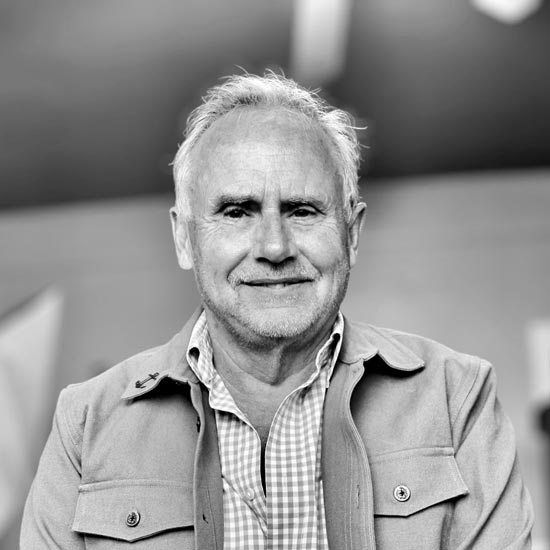



Valentiner Architects was founded in 1973 by Niels Valentiner on a wing and a prayer. He had just graduated from architecture school. This is how he remembered it in his Legends interview:
“After graduation in 1973, I started the firm right out of school. I took the one-week exam and hung my shingle out on the door: Valentiner and Associates. I had to look important, so I put ‘Associates’ after Valentiner. That’s the problem when you start a firm. You have to look like you somehow know what you are doing.
“I must admit I would not recommend starting out that way, right out of school. It would have been smarter if I had gotten more experience — five or 10 years. I had two or three years working for architects that qualified me to get my license, so I had some of that background. I would not recommend that, but that is what I did.”
Turns out he was successful: “I had some connections with developers and some others. One of my first real jobs was with a builder in Ogden who was doing a design-build credit union at Hill Air Force Base. That became the first America First Credit Union, and the project turned into a relationship.”
And now, over 50 years later, VCBO Architecture is even more successful.
VCBO has grown from a small, entrepreneurial practice into a top-performing design firm in the Intermountain West and beyond, delivering impactful, award-winning work. The firm is currently ranked No. 1 in Utah Construction + Design’s Top Architectural Firms (2025) and No. 406 in Engineering News-Record’s Top 500 Design Firms (2025). In 2024, Engineering News-Record Mountain States named VCBO its Intermountain Design Firm of the Year, underscoring the firm’s continued impact across the region and beyond.
In addition to its Salt Lake City headquarters, VCBO serves Utah and the broader region with its St. George office. In 2025, VCBO welcomed FSC Architects — a boutique hospitality planning and design firm — and established a Honolulu office to support its growing Hawaii team. While the firm’s scale, capabilities and geographic reach have expanded significantly over the past five decades, its core people-first, design-forward philosophy has remained consistent.
I spoke with several employees about why VCBO survives and thrives, about the culture of the firm, and what the firm feels like in 2026. From sustainability to change and succession, Coreen Crouch, NCIDQ, Principal, Interior Design Leader; David Cox, AIA, NCARB, Principal, K-12 Education Design; Emma Kratz-Bailey, CPHD, LEED AP, WELL AP, Sustainability Coordinator; and Jesse Sherr, AIA, LEED AP, Senior Architect, Project Manager, Associate, address each question from their unique perspectives.
Why do you think that VCBO is successful?
Coreen Crouch: We are financially successful because our clients have confidence in the designs. And we treat them well.
David Cox: We go to school thinking we are going to design cool buildings. Running a business and making it successful is something very different; Niels was a visionary. The firm recognizes that our value is in our people and not our product.
We are laser-focused on our people. Some firms are studio-oriented. At VCBO, teams start with the project from day one to the ribbon-cutting. Our secret sauce is that people become invested in the firm very early in their career, and it becomes natural to become an owner in the firm.
We are hired by clients to do what they can’t do for themselves. We protect their backs, and that is a major responsibility. When a client recognizes your commitment to their success, they really appreciate it. You can show some flashy pictures, but that commitment shows up pretty quickly when we are in the trenches. Our first priority is that the client is happy. As a result, over 90% of our work is repeat work.
We find the fastest way to turn off a client is nickel-and-diming. We are very cautious in putting together a fee at the beginning. We provide a fee, and then we try not to go back for changes. Because our team stays with the project, it helps us protect that investment in the relationship. Because we are not trying to make our profit on one project, we can look at the longer scale of the relationship. That reinforces their trust in us.
What about new clients?
Dave: Architects create visual stories for our contractors to make happen. We are part artists and part engineers. Pretty pictures that look nice are not very understandable, and not very helpful, but a good set of drawings that is easily digestible goes a long way.
I am very proud when contractors are asked who we should talk to, and a contractor puts our name forward.
What is significant about the culture of VCBO?
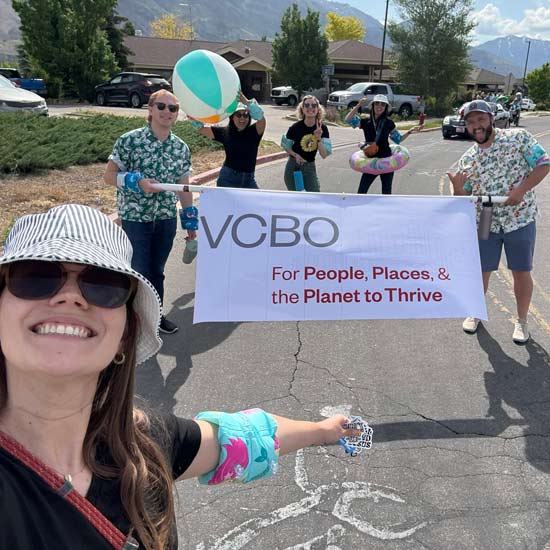
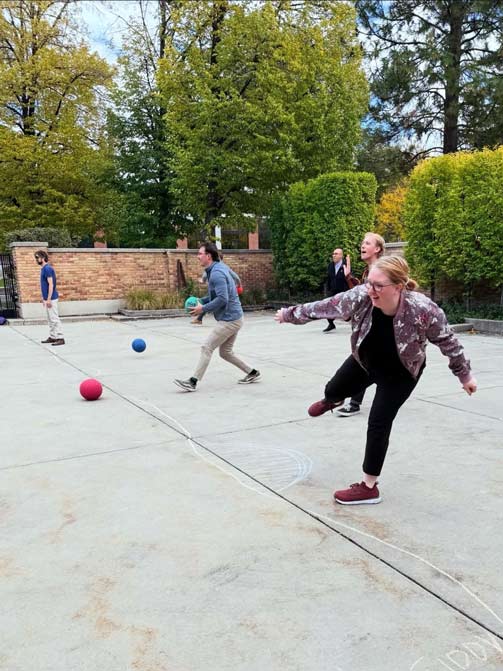
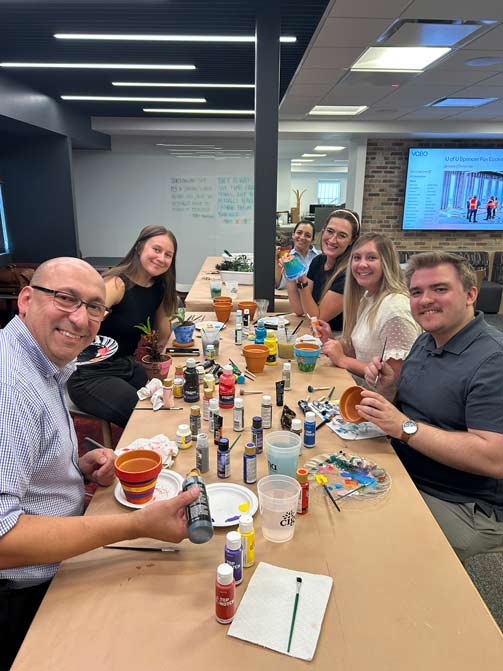
Dave: We are truly a family. We form community groups and mix up our staff to build relationships. VCBO is focused on our staff as our commodity. Employees see that.
Emma Kratz-Bailey: VCBO is a good place to work — there really is a spirit of collaboration. People feel safe asking questions, and we are willing to try things and experiment. VCBO encourages people to get to know each other. They establish communities to foster togetherness.
Jesse Sherr: I came here after 20 years in the industry and six different firms. We have a people-first approach to our projects and our relationships. That shows in the time that leadership dedicates to our well-being, the resources and room given in terms of workload, and our ability to get to know each other on work time. There is room in our schedules to allow non-work activities. The leaders are very approachable and open to discussions on a deeper level.
Coreen: We think of [our VCBO family] and their life goals. They feel that they are benefiting the firm and are appreciated. I started 15 years ago and was very surprised by how well VCBO treated their employees.
What does the process and practice look like?
Jesse: Before we establish what the building is going to look like, we need to know what its soul wants to be. We want to understand what our clients are like and become ingrained in the culture of the community. We learn about the client and their history.
There is a level of care that we are putting into each other, our clients and our buildings that feels exemplary; it feels patient. For instance, when I ask a team member to detail a wall section, I give them the purpose for the details: the best value for the client, stewardship of the client — making sure we have looked for all avenues and not just relying on what has been done before, but what can be done in best practice. We are not trying to develop buildings or products that are run-of-the-mill.
Dave: We expanded the effort of quality control. Our Means and Methods Committee meets weekly to address any problems that have arisen. Our quality control person does the code review and will just bleed all over the drawing. As a principal, it is up to us to decide what to integrate. It is all about relationships.
Examples?
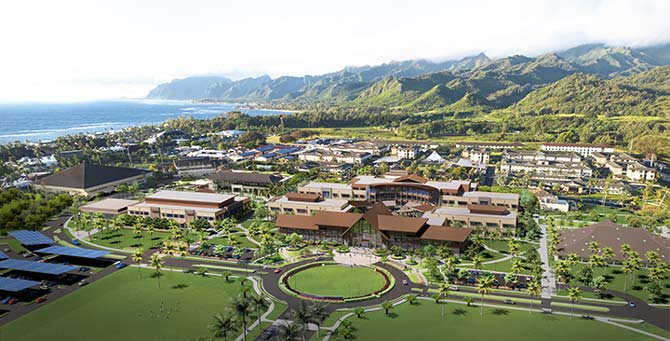
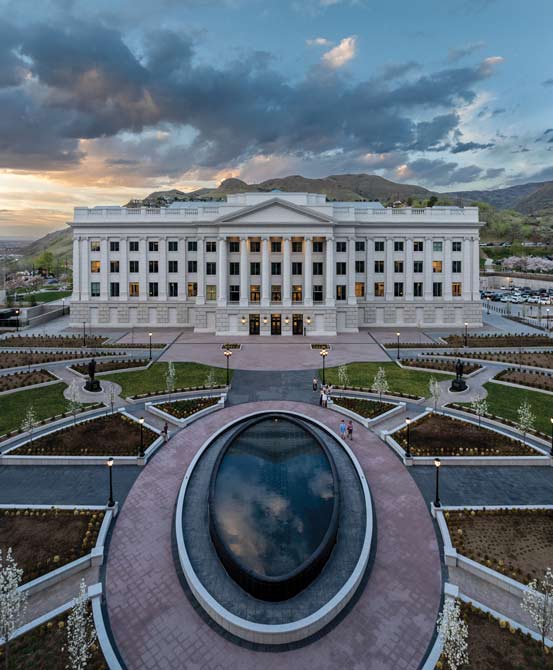
Coreen: There are so many good projects. The Suva Fiji LDS Temple was the first project that I was fully engaged in as an interior design manager. We were very intentional in integrating the Fijian culture into the temple. We wanted to design a building that touched their hearts. We had a similar experience at BYU-Hawaii, when we were hired to rebuild the McKay Complex for students to have a home away from home. Specifically, we start with a precedence study. I go to libraries and check out books, watch documentaries and go to local museums. It is exhausting but fulfilling to be able to create a space that reflects the culture.
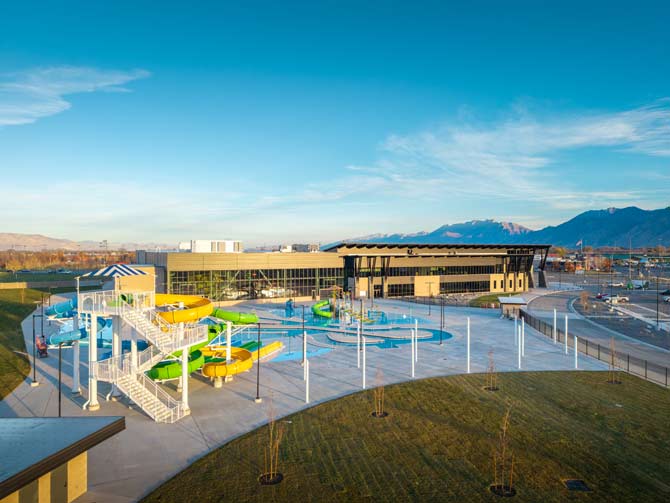
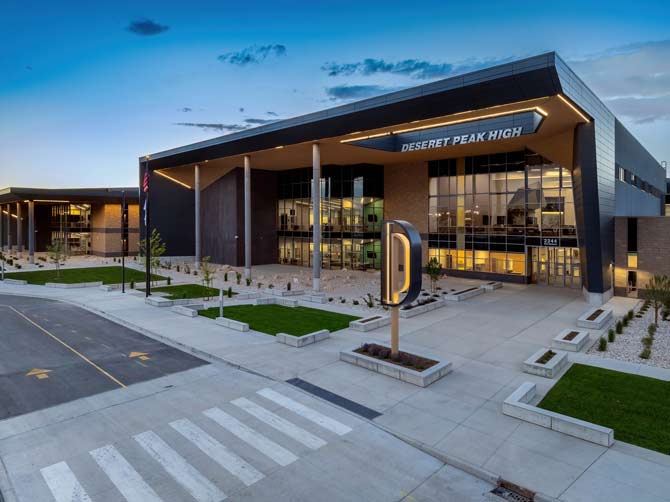
Jesse: I have an ongoing project: a new high school in Saratoga Springs. The district had done the same thing over and over — we saw the possibilities in branching out a little bit and exploring other pathways. We developed what we would consider a conservative design, but was the most design-forward building they have had for 20 years. By asking “What about this? What about that?” we were able to get them outside of their comfort zone and find some space for innovation.
The students who will go to that school will have access to some things that are almost subconscious: expansiveness and a volume of life that enables the students to see each other and be more comfortable and less stressed out in their spaces. We’ve been able to increase the amount of daylight that comes in as well as improve the quality of the furnishings and the air. All of those things are not consciously accessed, but in the end, make a difference for our clients and the generations of students and educators who will go through that building.
How do you know how to produce a safe, efficient, aesthetically pleasing building economically?
Jesse: A considerable amount of our success comes from the firm having its business practices together. A well-organized firm allows for patience in the process; you are not always scampering, with everyone trying to get stuff out the door.
Coreen: We start every project with the square footage. We back it up with our knowledge of prior projects. We are very detailed. We have to be very strategic about putting together the teams and schedules, especially with all the likely starts and stops. A new project type makes it difficult, and the competition is fierce. We ask what we can do as VCBO to stand out from other firms then elevate each other.
Jesse: We build consensus and stakeholder trust by evaluating and generating our ideas, then honing them together toward solutions that work best for them.
Can you talk about how VCBO approaches responsible environmental design and how that is integrated into the firm’s ethos?
Emma: I was brought in January of last year. Sustainability has been a part of all our designs, but it was time for a dedicated role. We have been integrating sustainability into our workflow. That means establishing baseline sustainability, as well as energy monitoring, and reporting on 2030 Challenge targets. We want to be a voice for sustainability and a resource for clients, other designers and anyone who has questions.
The VCBO sustainability brand goes back to collaboration with our clients. For so many clients, maintenance, durability and reduced running costs are their key project drivers. Our goal is to save our clients money and reduce negative influences on the environment. Of course, we start by getting the low-hanging fruit, but VCBO’s goals are related primarily to reducing harm in our overall portfolio. We generally have 20% harm reduction on our projects.
How do you sell sustainability to clients?
Emma: It depends on our clients. We try to be data-driven. Some clients are not willing to embrace it; they don’t value it. However, efficiency language feels more relatable, and that is a way in. We try to mesh our sustainability goals with their overall project goals.
For instance, we had a healthcare project where we specified window shades that were much more expensive than standard shades. The reason is that a lot of textiles have Volatile Organic Compounds (VOCs) in their synthetic materials, adhesives, colors and fire retardants. These shades don’t have VOCs, so they are healthier, which aligns with their healthcare mission.
Other clients are more progressive. We are working on a project in the Salt Lake Redevelopment with a net-zero requirement. We were able to run early-stage energy models and simulations — how much it would cost comparatively to achieve net-zero. They are currently designing to be net-zero ready and to timeline when to add solar PV features.
Ultimately, it is important to be able to present numbers and be data-driven to justify decisions that impact the bottom line.
How do you stay on top of sustainability advances?
Emma: We engage in web-based platforms. The sustainability community is delighted to share new information that has been derived by boots on the ground — trying stuff, reporting and modeling. It is simple enough to do sanity checks. Vendors’ tutorial videos are also really helpful.
What are some of the sustainable projects that you are working on?
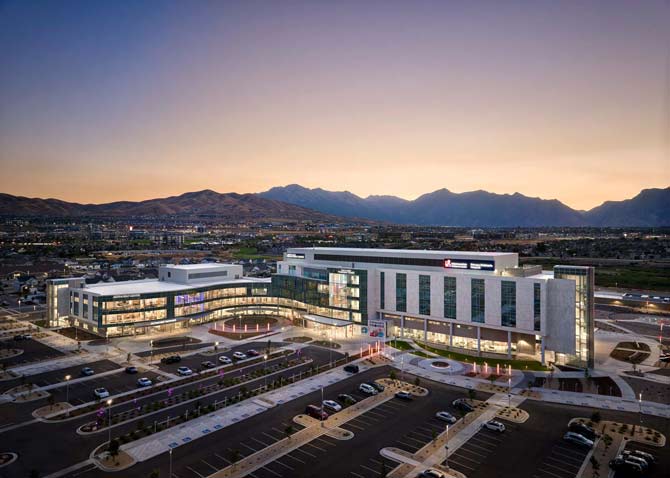
Emma: We have several LEED projects we are currently working on. The Spencer Fox Eccles School of Medicine at the University of Utah is targeted to be LEED Gold. It is very exciting because of the challenges [design faces] with energy-intensive labs and technology. The Noorda Engineering, Applied Science & Technology Building at Weber State University is another. By separating the lab spaces from the classroom spaces, we can reduce embodied energy.
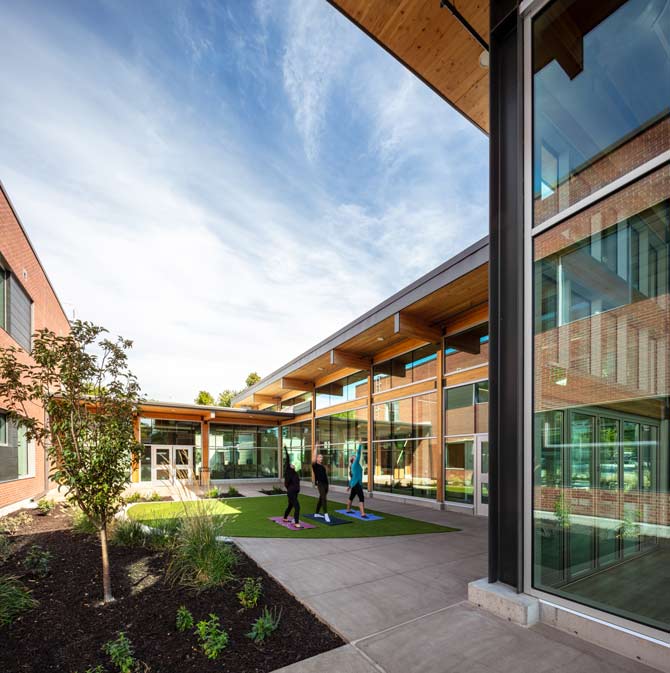
The site constraints at the University of Utah’s Charlie Monfort Field at American First Ballpark made it harder to achieve the water use goal, but by working with the client and the entire design team, we were able to reduce water usage. The Westminster Integrated Wellness Center is also net zero. Natural materials such as wood, brick and zinc combine with the building’s mass timber elements — including mass timber beams and columns as well as cross-laminated timber roof decking and ceiling panels — to elevate the building’s overall sustainability.
Our own Salt Lake City office is an adapted reuse building with an Energy Star rating of 85. It has been nice that we have been investing in more health, awareness, and updated technology and biophilia.
Where do you think VCBO is going? How has VCBO approached the evolution of the profession and succession in the firm?
Dave: Change always brings fear. Businesses that sit too long in that fear fail.
Technology is one thing, but the clients have to be responsive, not just in how we produce documents but how the buildings are built — we have to stay on the cutting edge. Inevitably, there are rough edges. The speed of change is hard to keep track of, but the opportunities are profound.
VCBO has a bright future. Past history is informing the future. We are not afraid of change.
We have 19 active principals, 140 people and offices in Salt Lake City, Utah County and St. George. We joined forces with FSC, a Honolulu-based firm, to provide service to Hawaii. We have specialties in K-12 education, higher education, religious, civic, healthcare, hospitality, industrial and commercial work.
We are on our fourth major succession cycle. We don’t arbitrarily choose our principals. Our clients choose our principals. They recognize the commitment of an individual to good design, quality documents and attentiveness. There is a time when the client says they trust our project manager or turns to them directly. That is when we know that this person is our next principal.
We try to help people to develop relationships and skills. We don’t get in the way of progress.