





Derek Payne, AIA — Bronze Medal Award
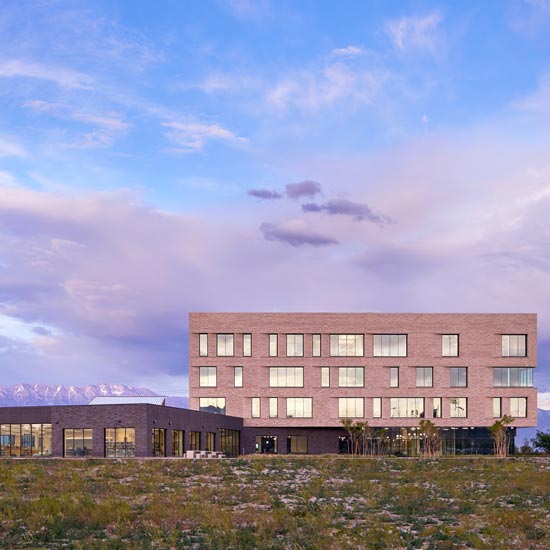
Among Derek Payne’s many contributions to architecture, his influence on higher education throughout Utah stands as his most enduring legacy. For more than three decades, Derek has helped shape the physical environments where generations of students learn, discover and prepare to serve their communities. His work extends far beyond individual buildings; it has helped define the identity, character and future of campuses across the state.
Few architects have had such a broad and lasting impact on Utah’s colleges and universities. From comprehensive campus master plans to landmark academic, athletic and student-life facilities, Derek has consistently approached each project with a deep understanding of the institutional mission, campus context and evolving needs of higher education. His work at Westminster University exemplifies this commitment. Through successive planning efforts and transformative capital projects, Derek helped shape a campus that is both cohesive and distinctive — one that reflects the University’s history while positioning it for future generations. Today, Westminster’s welcoming character, thoughtfully connected open spaces and architecturally contributing buildings stand as a testament to its commitment to creating contextually grounded architecture that reflects the character of each institution.
Across Utah, Derek has likewise transformed the design of health professions, science, engineering and technology facilities. Recognizing that education is continually evolving, he has championed learning environments that are flexible, technology-enabled and collaborative. His buildings celebrate daylight, foster interdisciplinary interaction and create welcoming spaces that support both academic achievement and student well-being. These facilities are not only highly functional; they inspire curiosity, innovation and discovery while remaining adaptable for decades to come.
Underlying every project is Derek’s unwavering commitment to craftsmanship and architectural integrity. His extraordinary attention to detail, thoughtful response to context and insistence on enduring quality have produced buildings that age gracefully and strengthen the institutions they serve. Rather than pursuing architectural trends, Derek has consistently created places that belong to their campuses and communities, ensuring his work remains relevant and meaningful long after construction is complete.
The collective impact of this work is extraordinary. Thousands of students, faculty, researchers and community members experience Derek’s architecture every day — often without realizing the intentional thought behind it. His buildings quietly enrich the educational experience, strengthen institutional identity and elevate the quality of the built environment throughout Utah. In doing so, Derek has not only designed exceptional facilities; he has fundamentally influenced the way higher education architecture is envisioned and realized across the state.
Nate King, AIA — Young Architect Award
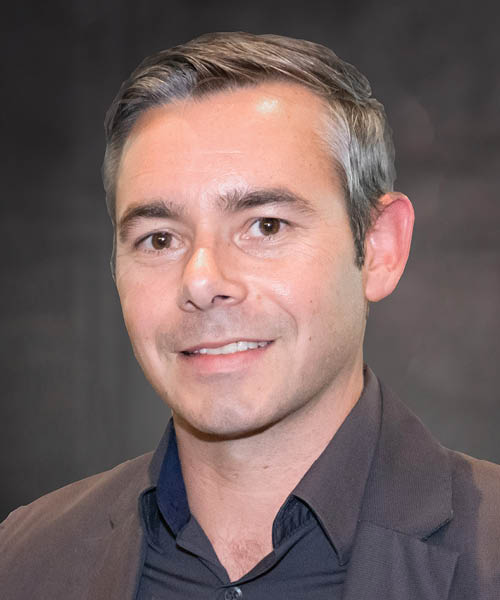
Nate King is an exceptional architect and an emerging leader in our profession. Since his licensure in December 2016, Nate has produced a body of outstanding design work, developed a strong record of leadership, and established a pattern of civic engagement that reflects the highest aspirations of this award. He is making a significant impact in Utah, both through his work in architecture and through his community and public service activities.
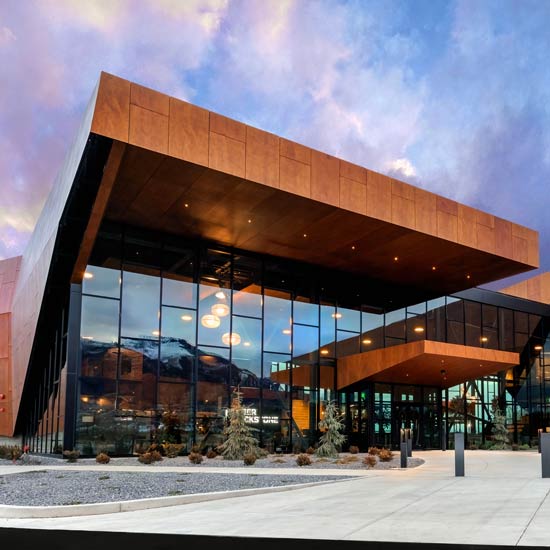
Nate’s design work has earned distinction at the state, regional and national level, a rare achievement for an architect within the first decade of licensure. He led the design effort for the Wabi-Sabi Residence, a project that earned an AIA Utah Honor Award in 2021, was featured in Wallpaper* magazine and was recognized internationally with a distinction from The PLAN in Italy in 2022. His work on the Emigration Creek Residence earned a second AIA Utah Honor Award in 2022. As project architect for the Nora Eccles Harrison Museum of Art at Utah State University, he contributed to a project that earned a regional Design Honor Award in 2024, an AIA Utah Honor Award in 2018 and recognition as a The PLAN Award Culture Finalist in 2020 — sustained recognition across multiple cycles that speaks to his architectural skill. Most recently, as principal and lead designer of the Pioneer Park Pavilion project, Nate has brought that same commitment to the civic realm, creating an iconic pavilion that will serve Salt Lake City’s civic life for decades to come.
Nate’s leadership is felt at every scale. Within Sparano + Mooney Architecture, he has progressed from project manager to principal architect and partner, now directing corporate vision, design teams and the company’s most significant commissions, all while mentoring the next generation of practitioners with rigor and generosity. As a graduate of the Goldman Sachs 10,000 Small Businesses program, he has invested in the practice’s strategic and fiscal sustainability with the same seriousness he brings to design.
Nate serves as the vice chair of the Salt Lake City Art Design Board, contributing an architect’s voice to civic decisions that shape the public environment for thousands of residents. He is also an active leader in the AIA Utah Young Architects Forum, organizing mentoring events, site visits and engagement opportunities that strengthen the emerging professional community throughout the state.
Nate’s architectural leadership has balanced the needs of the community with the technical and design considerations necessary to create welcoming public spaces that support everyday use, community events and future growth, ensuring that Pioneer Park remains a vibrant civic asset for generations to come. The quality of this work demonstrates his passion for public projects and his commitment to collaboration as a key element of success. Nate is an ideal candidate for this award and an exemplar for excellence in the practice of architecture.

Steven Price — Client Achievement Award
Steven Price exemplifies the type of client whose vision extends well beyond individual buildings. Throughout his career, he has demonstrated that development can strengthen communities by preserving history, investing in education, enriching public spaces and raising expectations for the quality of the built environment. His work reflects a long-term commitment to Salt Lake City and Utah that continues to influence how people experience the places around them.
Perhaps Steve’s most enduring contribution has been his investment in preserving and adapting existing buildings throughout downtown Salt Lake City. At a time when redevelopment pressures have replaced many smaller buildings with larger, more uniform projects, Steve has intentionally invested in properties that preserve the diversity of scale, materials and architectural character that define the city. Many of these buildings are historically significant, and Steve has consistently sought to honor their stories while adapting them for modern use. Rather than viewing these properties as redevelopment opportunities, he recognizes that they collectively create the authentic urban fabric that makes downtown unique. His projects demonstrate that preservation and economic vitality can work hand in hand.
Steve’s commitment to community extends beyond private development, as evidenced by his family’s extraordinary investment in public education. The Price family’s philanthropy has helped shape generations of students through transformational gifts to the University of Utah, including the Price Computing and Engineering Building and the Price Theatre Arts Building. Their longstanding support has also contributed to cultural institutions such as the Utah Museum of Fine Arts. These investments reflect Steve’s belief that education, research, innovation and the arts are fundamental to Utah’s long-term success. His generosity has created places that inspire learning, discovery and creativity for decades to come.
Steve believes that art should be part of everyday life. Throughout his portfolio, he has thoughtfully incorporated public art into commercial, office, adaptive-reuse and industrial developments, creating moments of discovery and delight that enrich the public realm. Sculptures inspired by Hogle Zoo animals, whimsical shipping containers integrated into industrial campuses, and the ravens hidden throughout Lone Peak Business Park, including one carrying a Starbucks cup in its beak, reflect his belief that development should have personality and invite curiosity. These artistic elements transform ordinary projects into memorable places and demonstrate that even commercial development can contribute meaningfully to community culture.
Steve has also redefined expectations for commercial architecture throughout Utah. Through developments in Salt Lake City’s Northwest Quadrant and in Draper’s Lone Peak Business Park, he has demonstrated that manufacturing, warehouse, and retail facilities can be both highly functional and thoughtfully designed. His projects have continually evolved to respond to changing industrial operations, market demands and tenant expectations while maintaining a commitment to quality materials, careful detailing, long-term ownership and a sense of personality. Rather than developing buildings for short-term returns, Steve invests in properties that will serve businesses and communities for generations, establishing a standard for commercial development that has influenced projects throughout the region.
Steve genuinely cares about Salt Lake City and the people who experience the places he helps create. Whether preserving historic buildings, supporting education, commissioning public art, or elevating industrial architecture, he approaches every project with the conviction that thoughtful design leaves a lasting impact on a community. His leadership, stewardship and unwavering commitment to design excellence make him an exemplary recipient of the AIA Utah Client Achievement Award.

Ben Eder — Excellence in Building Award
Ben Eder is an artisan who blends design with hands-on craftsmanship. First entering the architectural design sphere as an electrical engineering consultant, Ben later expanded his professional reach by working at Architectural Nexus. He further honed his architectural discipline through studies at the University of Utah’s School of Architecture and through extensive practice in his workshop, developing under the guidance of industry mentors.
After graduation, Ben pursued a more traditional architectural career path. However, a growing passion for tactile, hands-on fabrication led him to found tänd studio. Through this practice, he creates furniture, fixtures, and tableware designed specifically to complement and enhance the architecture they adorn. Ben’s work as an artisan stands as a testament to a distinct approach that treats the design profession as an evolving craft.
Ben said, “I was drawn to architecture because it offered a way to bring together creativity, problem-solving, materials and making. Every day brings something new, different, and a design problem I have yet to solve. My early professional life began in commercial architectural engineering. Working as a consulting electrical engineer, I tackled large systems and interdisciplinary integration, including mechanical, electrical and architectural needs. I very much enjoyed electrical systems design; however, I was always drawn more to the ephemeral environment, curated in a well-designed space. So I transitioned into architectural design at Architectural Nexus in Salt Lake City.
“After working on countless commercial and industrial projects, in both architecture and MEP, for a few years, I became increasingly interested in working at a more intimate scale, where I could explore the relationship between material, craft and story directly through my hands. I am also a bit impatient, and greatly enjoy the immediacy of furniture design and lathe turning. Instead of waiting months for permit review and approval, I am able to move at my own pace through my work. The shift to leave architecture and pursue woodworking full-time came with a table commission a little over a year ago. The Antanda Table, a piece I designed and built from salvaged sequoia recovered from the 1977 Marble Cone Fire in Big Sur, California. In Swedish, antända, or tänd, means ‘to ignite.’ This beautiful table ignited a passion in me to shift my career into the world of furniture design.”
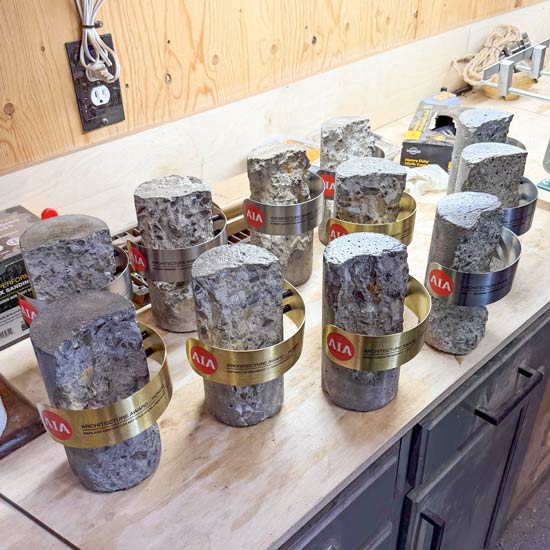
The concrete trophies Ben created for this year’s Celebration of Architecture are a testament to his perseverance, creativity and attention to detail. His work exemplifies the high standard of excellence our profession aspires to and makes him a worthy recipient of the Excellence in Building Award.

Frances Pruyn, CPSM — Honorary AIA Utah Membership
This recognition is reserved for individuals who are not architects yet have rendered distinguished service to the profession of architecture and the allied arts and sciences. Few individuals embody that standard more completely than Fran Pruyn, who has had a remarkable impact on our profession, our members and the broader architectural community in Utah.
Fran dedicated her career to supporting and enhancing architects and architecture. While her official title focused on marketing and public relations, Fran’s role extended far beyond that. She consistently championed architects, strengthened client relations and fostered business development, always with an eye toward helping both firms and individuals thrive.
For more than three decades, Fran has been a tireless advocate for marketing and business development in the AEC industry, elevating both the profession and the people who practice it. She was among the first generation of non-technical leaders in an architectural firm, helping establish a path for marketers and business development professionals to have a meaningful voice in firm leadership. Long before it was common, she recognized that architecture’s success depended not only on design excellence but also on the ability to communicate value, build trust and cultivate lasting client relationships.
Throughout her career, she helped architecture firms win meaningful work, grow their practices, and expand their influence in the communities they serve. She also served as a vital bridge between Utah’s architectural and engineering communities, fostering trust, communication and cross-disciplinary collaboration. Her efforts strengthened professional relationships, improved project outcomes and raised the standard of design excellence throughout the region.
In addition to her professional contributions, Fran has been indispensable to AIA Utah. She currently serves on our Board of Directors and has also served as the public relations chair. She is responsible for curating and editing this quarterly publication, Reflexion, which showcases the vibrant work of Utah’s architectural community. Beyond these ongoing efforts, Fran has made a particularly profound mark as a historian and advocate for our architectural heritage. Throughout her career, she supported historic preservation work, and at AIA Utah, she has led the creation of the AIA Legends series. She also led our efforts to preserve Abravanel Hall.
Fran’s ongoing commitment to our chapter, her unmatched ability to connect and uplift architects, and her passion for preserving and celebrating architectural history bring unparalleled value to our profession.
There is no more deserving candidate for Honorary Membership in AIA Utah than Frances Pruyn. Her lifelong devotion to supporting architects and advancing architecture embodies the very spirit of this honor.