



If you have a question you want to pose, an issue you want to explore with your colleagues, or an editorial position you would like to share in a future issue, please contact Joe Magnum at the AIA Utah office at jmangum@aiautah.org.
This issue’s question:
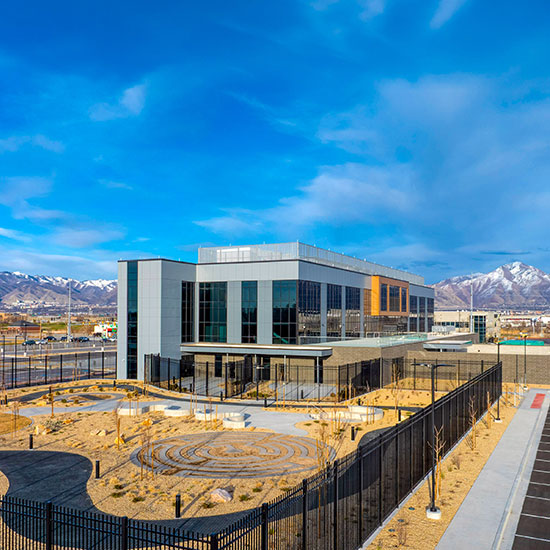
“Is there a way to design a sustainable AI data center?”
Garth Shaw, AIA, LEED AP BD+C, Principal, Director of Sustainability, GSBS Architects
Artificial intelligence (AI) promises to transform how we work, learn, discover and solve problems. Yet AI breakthroughs depend on something decidedly physical: massive data centers that consume enormous amounts of electricity and water. As communities compete to attract these facilities, we need to ask: Who bears the costs, and who shares the benefits? Can AI data centers be environmentally and socially sustainable?
Sustainability means meeting today’s needs without compromising the ability of future generations to meet their own. By that standard, most large AI data centers fall short. They place extraordinary demands on electricity, water and public infrastructure, often requiring costly upgrades to power and water systems. Many also rely, directly or indirectly, on fossil-fuel-generated electricity, thereby contributing to greenhouse gas emissions. While these facilities may bring investment and tax revenue, local communities can also experience increased pressure on public resources, concerns about water availability and questions about whether the economic benefits justify the long-term environmental costs.
That does not mean a sustainable AI data center is impossible. Lower-water-use cooling systems, waste-heat recovery, more energy-efficient computing, carbon-free electricity and better facility design can significantly reduce environmental impacts. Greater transparency and economic agreements that fairly balance private benefits with public costs can also strengthen the social sustainability of these projects.
Innovation should not excuse any of us from accountability. Those who design, finance, approve and operate AI data centers must ensure that technological progress does not impose disproportionate costs on future generations.
Additional resources for those interested in data center design:
- Architecture 2030’s Data Center Evaluation Checklist: An eight-point framework designed to guide developers, policymakers and urban planners in creating sustainable, zero-carbon digital infrastructure.
- Novva Data Centers: A Utah-based company that has become a national leader in energy-efficient hyperscale data centers. Their facilities emphasize water conservation, renewable energy and innovative cooling strategies.
- Aligned SLC Data Centers: Aligned is known throughout the industry for advanced cooling technologies and sustainable data center design.
- Smart Building Solutions DBA Intellivex: Specializes in smart building systems and data center infrastructure, including energy-efficient building technologies.
- UtahDB Data Management Lab: Part of the University of Utah Kahlert School of Computing, this research group is focused on designing and developing efficient, scalable data management systems.