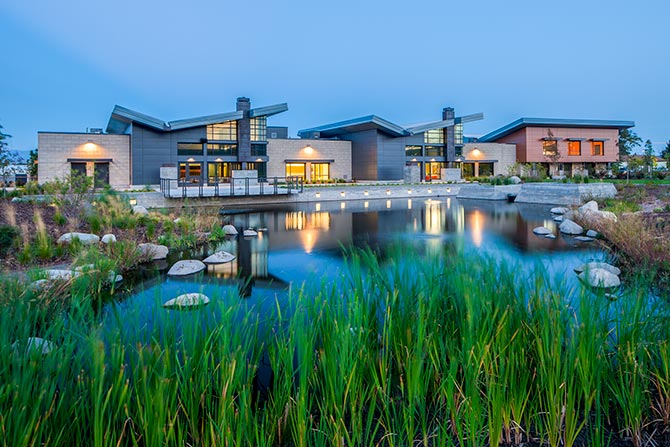
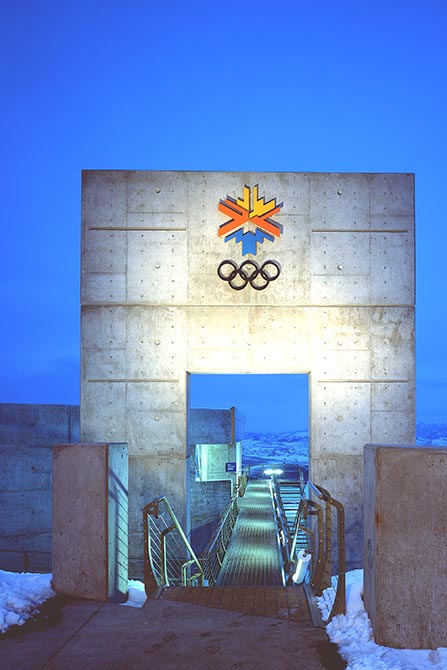
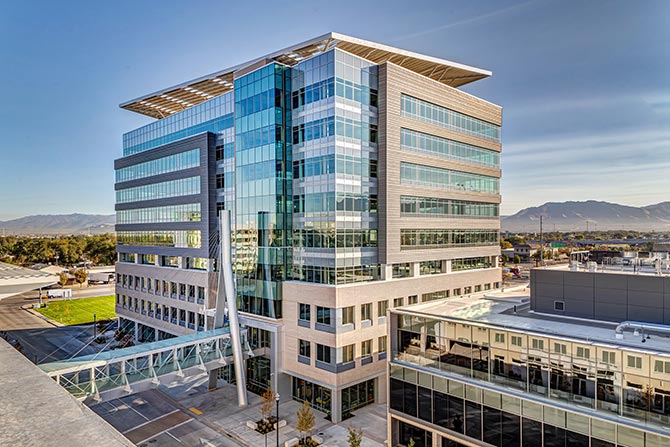
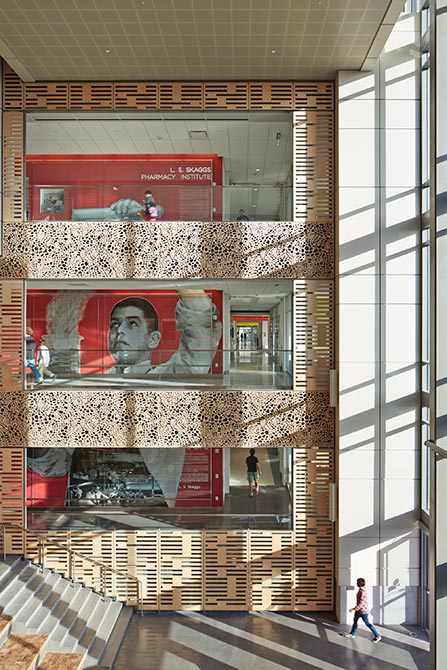
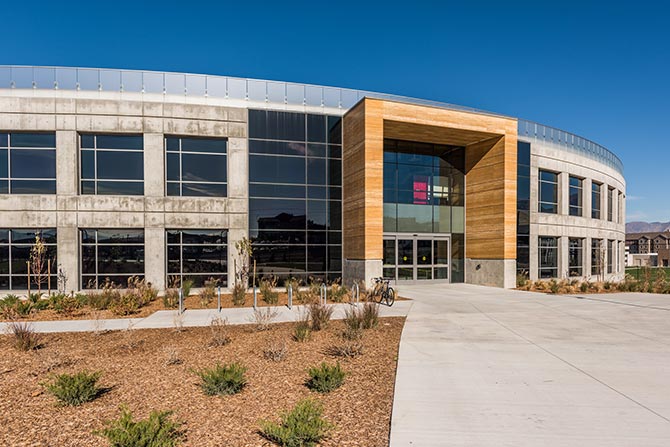
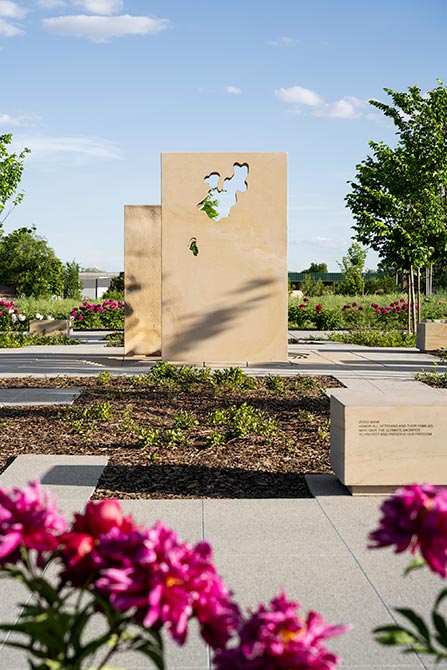
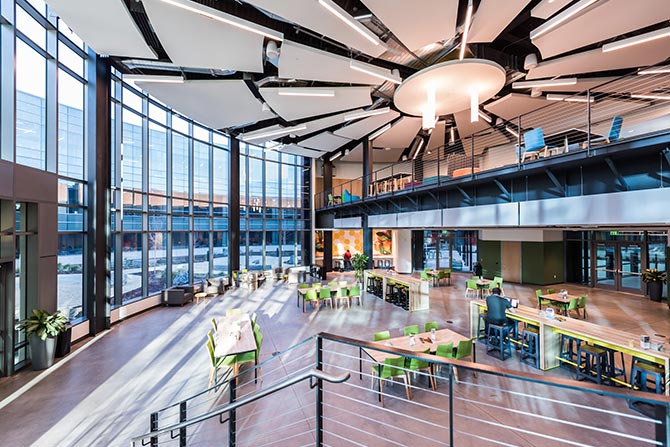
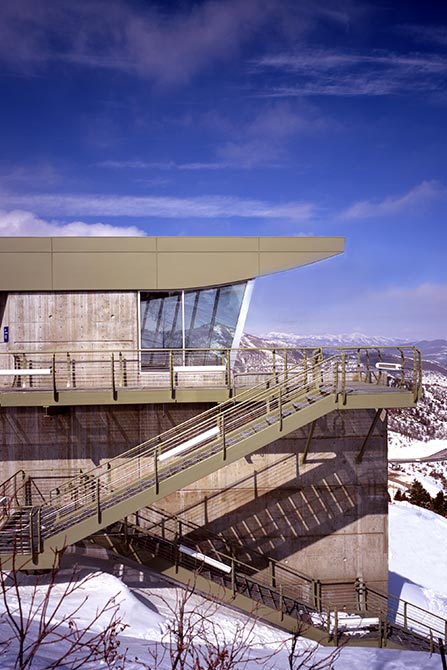
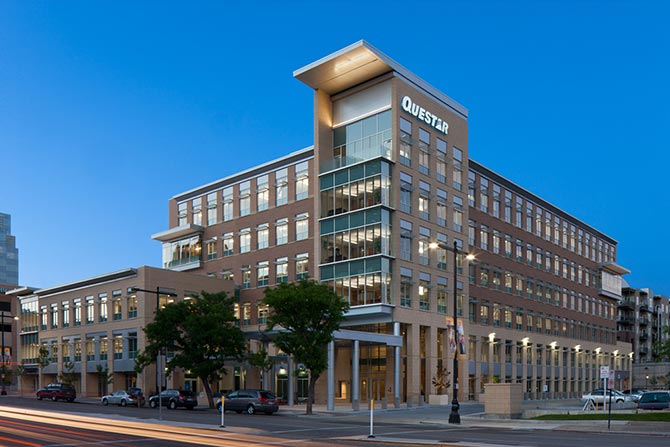
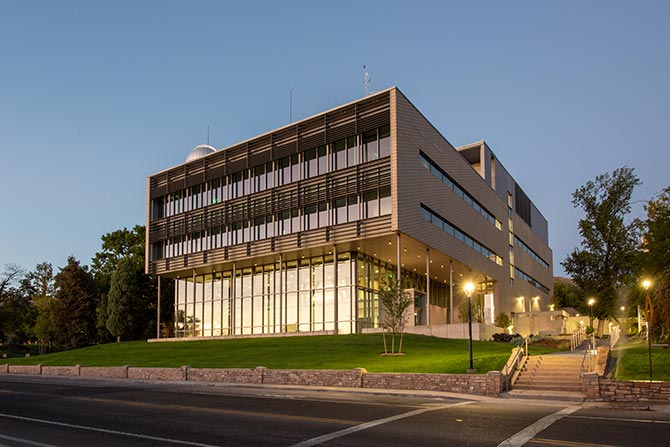
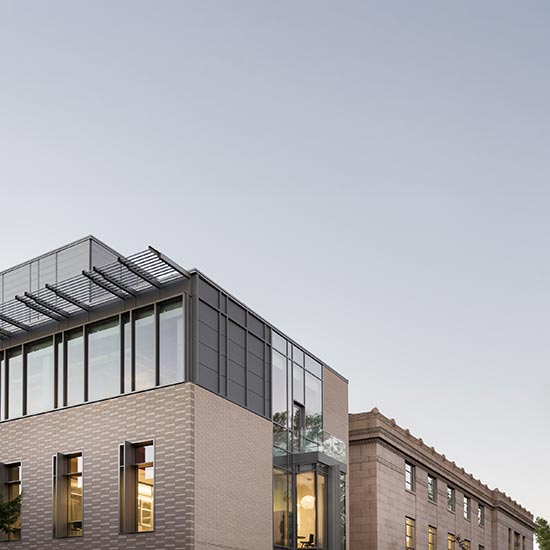
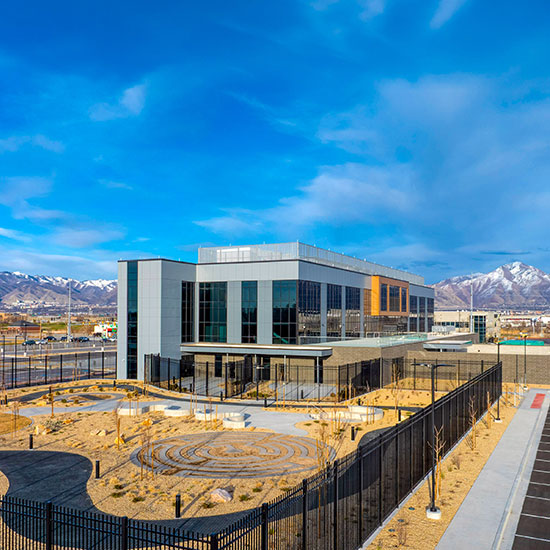
Above: University of Utah Crocker Science Center
Each successive generation of EDA leaders has embraced and refined the firm’s design philosophy, which current leadership refers to as “Utah Modernism.”
Ralph Edwards and Jud Daniels, graduates of UC Berkeley, came home to Utah and established Edwards & Daniels Architects (now EDA) in 1955. Prior to returning to Utah, Jud worked for Skidmore, Owings & Merrill (SOM) while Ralph spent time with John Reid in San Francisco.
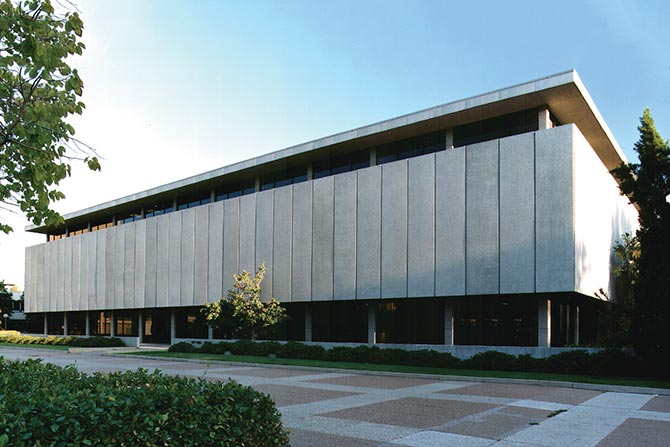
Influenced by the international style, the two are credited with bringing modernism to Utah. The clean geometric forms, minimal ornamentation, large expanses of glass, exposed concrete and steel, and strong connections to the Utah landscape and climate served for decades as a signature of their work.
Notable modernist projects illustrating the application of Edwards and Daniels’ design philosophy are Carbon High School (1959), Salt Lake City Main Library (1964), University of Utah Art and Architecture Complex (1970), Governors Plaza (1983) and the Winter Sports Park (2002).
Since Ralph and Jud’s retirement, the EDA succession of capable leaders includes Ron Simmons, John Taft, Burke Cartwright, Peter Emerson, John Shuttleworth, Greg Brooks and Robert Herman (see Legends article). These individuals and the current principals guided the firm to grow and thrive through seven decades in the turbulent world of Utah architecture.
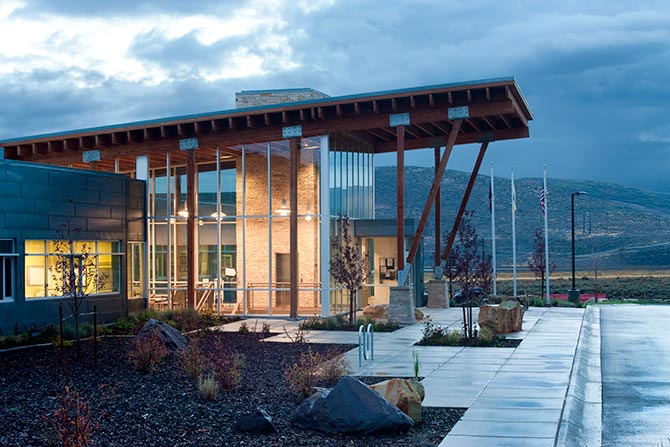
Utah Modernism’s continuance derives in part from EDA’s tendency to grow leadership from within its staff. Recent examples of Utah Modernism under current EDA leadership include the Miller Student Commons at Waterford School, the University of Utah’s L.S. Skaggs Applied Science Building and the Wasatch County Administrative Building.
I recently sat down with the fourth generation of leaders to talk about who EDA is in its current iteration: the firm’s culture, philosophies and goals. Certainly, this trio has longevity with EDA — each has worked with the firm since the late ‘90s.
Thomas Brennan, AIA, LEED AP, NCARB, currently serves as the firm’s president and directs its civic and public sector practice. Joining EDA in 1994, he is closely associated with many of the firm’s government, justice, library and community projects throughout Utah and the Intermountain West. Tom’s projects of note include the Midvale Senior Center, Gallivan Plaza, Sweetwater County Justice Center and Weber County Main Library.
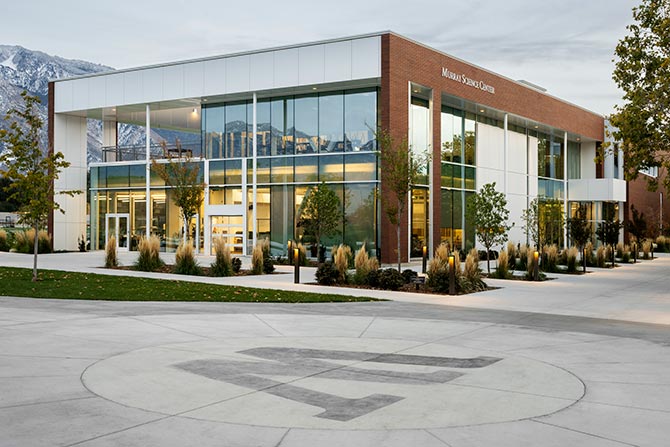
Principal Stephanie McCarthy has been with EDA since 1997. She directs the firm’s higher education and K-12 practice, with a focus on leading the programming, design and construction of major university and K-12 science facilities, including several University of Utah projects and Murray Science Center at Waterford School.
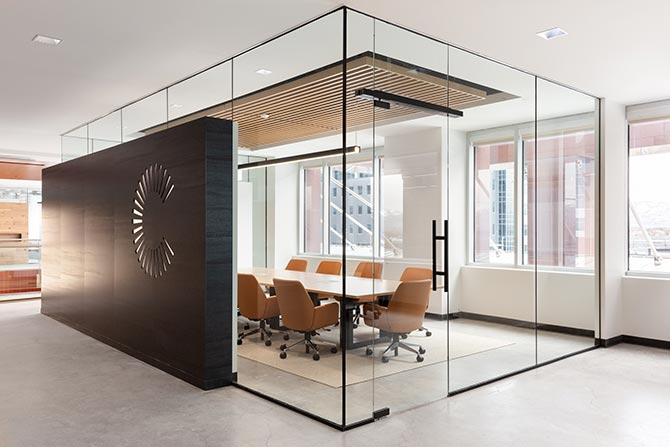
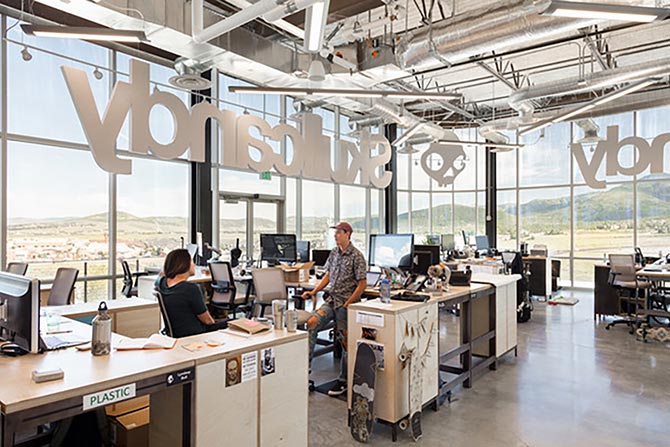
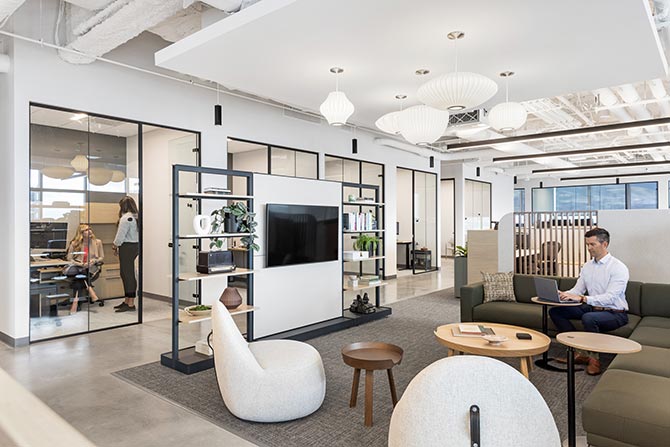
Joining EDA in 1997, Evan Cindrich, the principal who leads EDA’s interior design practice, has 39 years of interior design and project management experience. His established reputation for developing effective, efficient workplace and corporate interior solutions includes headquarters projects for companies such as Skullcandy, Overstock, Maverik, Weave and Lucid Software.
Tom, Stephanie and Evan agree that Utah Modernism guides EDA’s firm ethos and defines its architectural vision. The progressive design philosophy, rooted in the unique climate and context of the Intermountain West, is realized through the aesthetic and practical drivers for EDA’s work. The trio defines the principles of Utah Modernism as:
- Clarity of plan organization
- Natural light as form giver
- Integrated art
- Elegant, timeless quality
- Engagement of all the senses
- Movement through time and space
- Clear and expressive structure
- Connection of outside to in and inside to out
- Unity of architecture and landscape design
- Responsible environmentalism
- Natural materials with colors and textures reflective of Utah and the West
Embodied in EDA’s projects, Utah Modernism leads to transformational places for EDA’s clients. Rather than resulting in a signature “look,” it expresses itself through a commitment to the regionally relevant, environmentally responsible and community-focused tenets of progressive design.
Collaborative Process
Tom, Stephanie and Evan describe EDA’s culture as client-, design- and service-oriented. Its design process focuses on collaboration rather than hierarchy.
Tom says, “I think it’s revealing that, aside from bookkeeping, we haven’t had private offices in over 25 years. We prioritize open access for and to everyone. Our structure is only hierarchical in that people understand where to go for resources and support.”
Tom explains EDA’s design-focused approach means the design expression is carried from concept through technical documents that are thoughtful, proficient and cohesive both functionally and aesthetically.
Stephanie remarks, “There’s something incredibly satisfying about moving a project from concept to realization. It’s especially rewarding for the team to see their work come to life, to watch it operate, and to be there to support their professional growth along the way.
“The people who stay the longest are those who are willing to jump in and help wherever needed. That spirit keeps the work dynamic and engaging for everyone. At the end of the day, if it’s not fun, why do it?”
Tom continues, “Excellence in design detailing is critical to creating facilities with lasting value, durability and sustained relevance — as history has proven with EDA’s Salt Lake County Main Branch Library. The building had it all. It was heavily used, yet when its original mission evolved, it was preserved because it had held up so well. It has truly withstood the test of time.”
Challenges Over Time
The leadership acknowledges that, though EDA experiences many successful seasons, like most companies, it has overcome its share of business and financial challenges throughout the life of the firm.
Tom explains, “Our goal is to continue learning how to create greater stability over time. None of us were formally trained for that — it’s something we’ve learned through experience. In the 1980s, as the economy softened, the firm went from 65 employees down to 20. By 1994, we were at 16, then grew to 45 leading up to the Olympics. During the dot-com downturn, EDA scaled back to 18 people within just 12 months. Over the past decade, we’ve maintained a more consistent staff of approximately 25 to 30 professionals, reflecting a more stable and sustainable approach.
“Leading by example can be daunting — stepping in to solve problems while bringing a sense of calm and direction to the effort. The harder times affect everyone differently, whether it’s making the difficult decision to lay people off or figuring out how to meet the next payroll. Leadership is ultimately about earning buy-in. EDA has endured because of a shared commitment to our culture and, at times, a willingness to make personal sacrifices.
“We approach each of these challenges by bringing all our expertise to the table and solving them together. That collaborative approach strengthens both our client relationships and our team growth. In the end, what we’re building is bigger than any one of us individually.”
As a result, despite the architectural profession’s tendency to mirror the overall economic climate, the EDA leadership team knows that they have very fulfilling careers.
Where They Are and Where They Hope To Go
Tom says, “It’s incredibly exciting. We’re currently working on a wide range of planning and design projects and have built a strong reputation in tenant improvements. Most of our work comes through referrals — about 98% is from repeat clients — which is remarkable and speaks to the strength of our relationships and the trust we’ve earned.”
Evan adds, “Maintaining the relationships and friendships you build is just as important as the work itself. There’s something bittersweet about the end of a project — you’ve worked so closely together, and then it suddenly comes to a close. That’s why it’s important to find ways to keep working together again.”
The Future
Tom would like to grow the firm a little bit: “We currently have 25 professionals. With a team of around 40, you can take on virtually any project while still maintaining close collaboration. Beyond that size, it becomes much harder to stay connected, and teams tend to become siloed.”
Stephanie says, “We grow very carefully. We’ve never been a hire-fire firm. It is always agonizing to lay off employees. That is not who we are as a firm; we invest in people.”
Tom continues, “I’m a little apprehensive about what comes next as we consider how AI will change our profession. AI can’t cultivate relationships — that human connection will always matter. I see it as another tool, part of a natural technological evolution, much like the transition from hand drawing to CAD, and from 2D drafting to 3D modeling with Revit. There will always be a need for a critical eye, thoughtful judgment and human insight.”
EDA’s leadership is focused on building the firm as one grounded in design to provide a high-quality product both aesthetically and technically. Continuing the application of Utah Modernism, Tom, Stephanie and Evan lead by example to instill the joy of doing the work and working together both internally and with the entire project team. That is what they hope to pass on to future generations.
Stephanie concludes, “We are a full-service architecture firm, designing with and for people. Our work is about creating buildings that inspire and environments that transform communities. We truly believe architecture is one of the most powerful design disciplines — capable of shaping people’s lives and improving the world around us.”