





As part of our ongoing series of interviews with architectural legends, we are proud to present this interview with Gary Payne, FAIA. It was a pleasure to interview him, to learn more about his impact on architecture in Utah schools, and to understand all the contributions he has made to the industry. This interview has been edited for length and clarity.
Gary, when did you decide to become an architect?
When I was a small kid, you couldn’t keep me out of a construction project. I would sit across the street and watch them build a new house. When they locked me out, I’d sneak in and unlock a window so I could get back in any time I wanted. So, at a very young age, I realized I was interested in architecture, but in 1976 at Weber College, I started out in business. I realized very quickly that I did not like business at all.
My brother-in-law was the sole proprietor of a drafting studio. He needed somebody to step into his office, so I volunteered. They were not pretty projects in terms of skill level, but I loved them. That got me into architecture school at the University of Utah. I took one year off at Gordon Hashimoto’s recommendation. I’m glad I did that because I went to work for Richard Koehler in Park City. I got some valuable experience and then came back into the program for my final two years.
What do you remember most about architecture school?
It was difficult, very difficult. I remember being scared to death when they told us architecture school would be 24/7. I was on my own and didn’t have financial support from family or scholarships. When I graduated, I had $40,000 in student loans. When I paid that off, I put in a pool to celebrate.
I met some good friends, like Neil Richardson, who were invaluable in helping me get through the process. Ted Smith, who was part of Richardson Partnership, taught structures at the U. When I took the ARE exam, the only thing I didn’t pass was structures. He teased me that he had taught me everything he knew, and yet I still didn’t make it. I said, “Well, you should have tried harder.” I finally made it and got my license. I was just ecstatic and continued at Richardson until 1989.

What were you working on, and what did you learn at Richardson?
I mostly worked on schools. Davis School District was one of our larger clients. At times, it was a little frustrating because the director of architectural and construction services at Davis School District liked to keep things very simple. We wanted to spread our wings and try some different things. Richardson even had a design competition for a school in Kaysville. We presented the winning design to that person at the district. He didn’t like it, so we went back to just the, as Steve Crane liked to say, “kid on a grid” double-loaded corridor school.
I loved being at Richardson. I had the privilege of working with Bill Richardson and Neal Stowe, who became the DFCM director, and then, of course, Ted Smith, who was over all the computers. When I was at the University of Utah, we didn’t have computers, and unfortunately, I was always just a few years behind. I hate to say it, but I never learned how to draft on a computer.
What did you learn at Richardson that you brought into your later career?
They taught me how to use the architectural library, back when it wasn’t all on a computer. There was one fellow there that I would always ask, “How do I draw this or that?” Finally, he got tired of it and said, “There’s the library.” Over time, I think I became the king of the library, and I knew where everything was.
They introduced me to meeting with clients on the site. Once, we were designing a library for the city, and I was late for a meeting because I stopped to answer questions on the site. I was really chewed out. I was late meeting the main person in the city, and he didn’t appreciate that. I learned that clients come first.
Eventually, I became the client. Davis School District offered me a position as the director of architectural services. Six months later, I became the administrator of facilities management and planning, working for Assistant Superintendent Lynn Trenbeath. She pretty much gave me carte blanche to do what I felt needed to be done.
In the mid-‘90s, we brought in Stephen Friedlander, FAIA, from Boston. I had seen him at an architectural conference and was very impressed with his school work. We invited two architectural firms, VCBO and Naylor Wentworth, and the engineers they proposed to join us. For three or four days, we rethought the concept of school design.
Up to that point, it had been just what we called an H plan. It had very few windows because of the ‘70s energy crisis, and dark brown doors. That dark brown was a standard paint color. The maintenance department didn’t want to have a different color to worry about. They were the most depressing buildings I’d ever seen. Walking into them would make me just cringe.
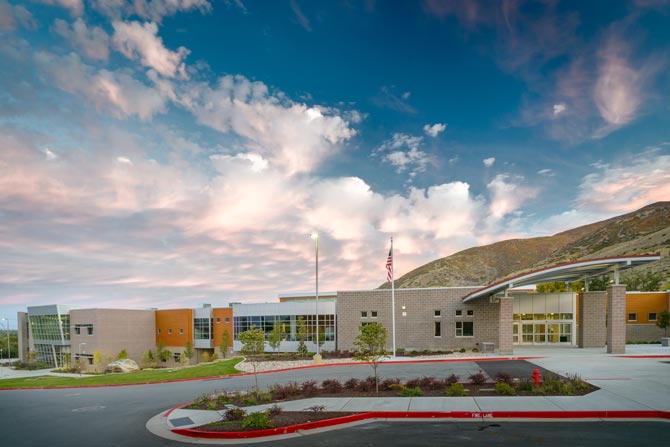
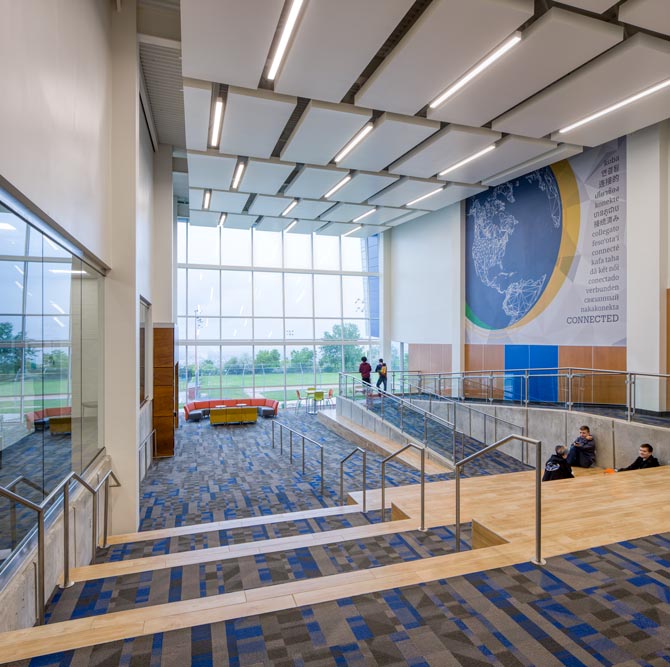
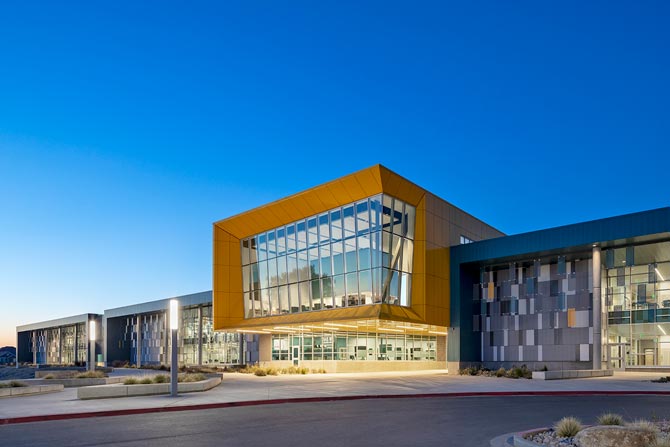
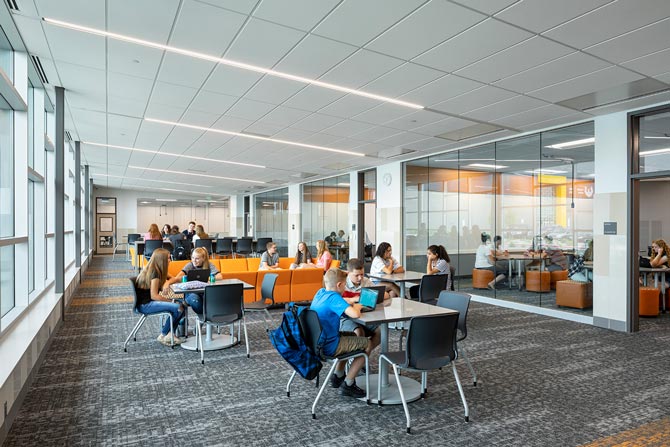
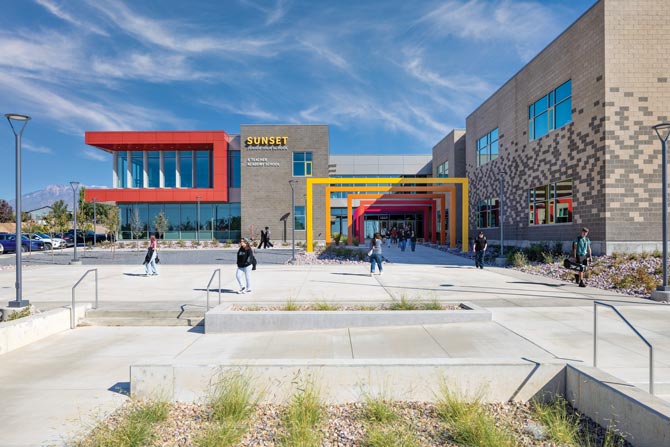
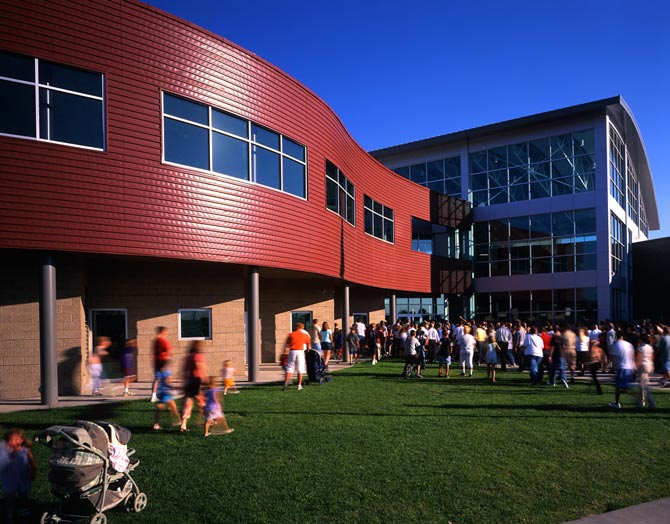
We took the information from that meeting and developed a new prototype. If I were to rebuild it today, it would be completely different, but at the time, in the late ‘90s/early 2000s, it was really stepping outside the norm. The classrooms went out in wings from the main corridor, and every classroom had large, spacious windows. We learned through the architects’ research the value of natural daylighting — the effects that it had on a person’s psyche and in learning. With just natural daylighting, a student can do 10% better on their test scores.
That first prototype had open ceilings. The board was upset that they had given us so much money — $87 a square foot — and we couldn’t afford ceilings. We had to go back and put the ceilings in, which was unfortunate. All that structure and pipework had the prettiest paint on it. Over time, we were able to expose some of the structure of the buildings, and we added more and more glass.
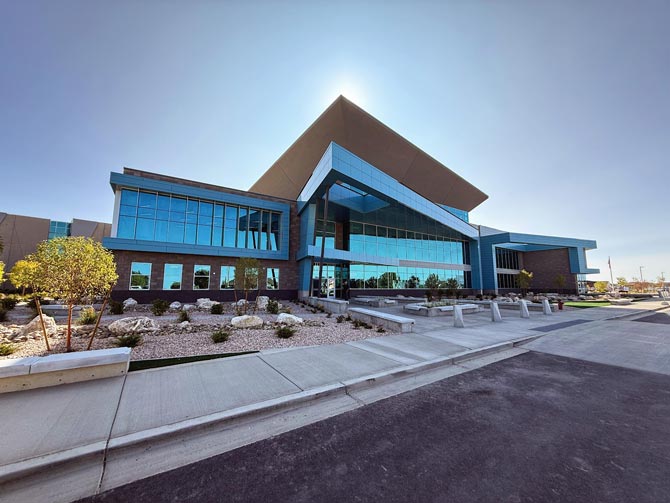
For me, the culmination was Farmington High School. It has floor to ceiling glass. This was at a time when school shootings were frequent, and that floor-to-ceiling glass was causing a lot of angst with my bosses and some of the local law enforcement. We brought in a group from Georgia to evaluate the school, and also invited Farmington City Fire and Police. I remember standing outside the building, and the police (chief?) said, “You will never sell me on the safety of this building.” I said, “Wait until you go through it.” After the tour, we met out in the parking lot again, and he said, “This is probably one of the safest buildings I’ve ever been in.” We took 12 samples of glass out to a shooting range. The police couldn’t even breach that glass with some of the tools they had at their disposal.


Design goals and challenges?
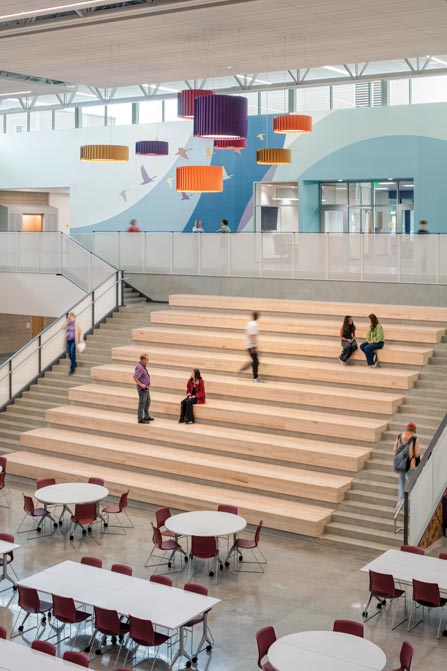
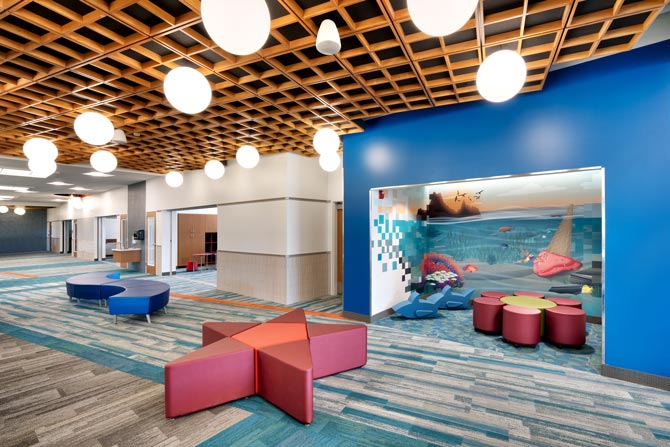
I always wanted children to want to go to school, to not be afraid to go in that front door, and I wanted the media center in the front of the building. In all of the H plans, the media center was buried in the central part of the school and had no windows. Having the media center in the front of the building allows people to see that education is going on without seeing directly into the classroom. They always want blinds to block bright sun in the morning, which makes sense, but we found they wouldn’t open the blinds; they got complacent. We went into a junior high school, and the blinds in the media center were closed to an interior courtyard. My director, Bryan Turner, and I opened all the blinds. We discovered there were bullet holes in the glass.
I asked the library director, “How long have these bullet holes been here?” She said, “Well, I don’t know.”
I asked, “How long have you been here?” And she said, “Ten years.”
“You’ve never opened the blinds in ten years?” She said, “No.”
So, we got blinds that diminish the glare, but even when they’re closed, you can still see what’s going on outside.
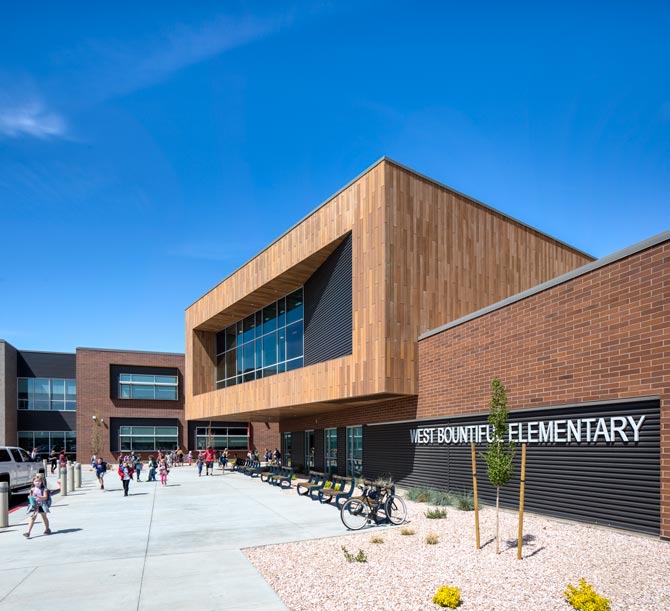
At Creekside Elementary, we had a post-occupancy building with some of the parents. One said, “I love this school. And my son loves this school. The best way that I can bring him in line when he’s acting up is to threaten that I won’t let him go to school in the morning. He loves coming to school.” I turned to the architect and said, “You did it. You made a school that kids want to come to.” I always hoped that our designs would help a teacher feel good about coming to school. If the teacher wanted to be there and the student wanted to be there, then it only was natural that test scores would rise.
The legislature did not like what we were doing. They felt like we were building Taj Mahals and that I was building a Taj Mahal to myself. I had to go to the legislature and testify to some of the committees. I also hosted Howard Stevenson, the head of the group over public education, at a tour of one our newer Layton schools. Stevenson was president of the Utah Taxpayer Association. I believe he and some a few other legislators owned, operated and built charter schools, and they were building the typical double-loaded corridor school with sheet rock walls. I believe they were paying about $127 a square foot for those buildings. In the early 2000s, we had built the Layton school for about $30 a square foot less than the charter schools.
We discovered good design doesn’t have to cost more. It just means your architect has to think more. We had engineers who really enjoyed working for us because they got to design things — and the things that they came up with were just amazing. Partway through my career, LED lighting started to come out. We started to utilize it. We did ground source heat pumps, and I think Davis School District probably has more net zero energy schools than any organization in the state, if not the nation. That saves the taxpayer millions of dollars.
The good news is that we lowered utility bills in the long run by spending a little more upfront on some of these systems. That money was left on the table for salary increases. It benefited everyone. We did a study in the early 2000s to help quiet some of the noise from the legislature. We discovered that our new architectural plans for the elementary were running $5 to $10 a square foot less than the old H plan. Our junior highs were running $10 to $15 a square foot less than the H plans. I attribute that to the architects and the structural engineers through the materials that they used and the way they engineered the buildings.
How did you work with architects to learn about the newest school design innovations?
I had a very supportive school board and superintendency backing me up. They allowed us to travel to almost every state in the United States. We attended several conferences where we would focus on school design: AIA conferences, the Council of Education, City Planners International and others where they focused solely on school design.
Davis School District has nearly a hundred schools and they are getting very old — the majority over 60 years old. Bryan and I had attended a conference in Florida on facility planning. We developed a document that tracks every single school and every element of that school. It took us a couple of years to develop, but that became the Bible for us. When Davis needs to go out for a bond, they use that document to show the need. Whenever we spent money to replace the school or do a major renovation, we referred to the planning document to show why it needed to be replaced. I went back to my office a couple of weeks ago and visited my successor, he had that document up on his screen and he was going through it.
What did you love most about the job?
Let me tell you what I liked the least: the selection process. Utah has some of the best architects ever. When we’re trying to select an architect, we try to be as fair as possible. I know some firms felt like we weren’t, but to overcome that, we would select a committee that could outrank us or outvote my director and me, and ofttimes they would. We would vote for them, but we wouldn’t get them because the committee would select someone else.
That marketing process is so important, especially if you’ve got a non-expert committee selecting the firm. They’re going to be sold on what the marketers present. I noticed with one of the top firms in Utah, and probably the nation, that the architects were so nervous that they didn’t present well. It hurt them. Selecting architects was very difficult because you always had to call somebody and tell them they weren’t going to get the job and they wanted to know why. My advice is don’t ask why. Just know that you didn’t get it and there’s nothing you can do to change the decision other than make the client uncomfortable, and you don’t want to do that. Just say thank you so much for the opportunity.
What I liked best was just the reaction from our students, from the parents. We went to an open house in Clearfield for a new elementary school for an underserved community. When they walked in, their jaws dropped. They could not believe that this was for them. One of the elements in that school was a fireplace with really comfortable seating so that Mom and Dad could sit in front of that fireplace and have a cup of coffee and wait for the principal. It was a homey place. We started putting pickleball courts in, and my boss thought I was crazy. But, you know, it’s for the taxpayer — to give them something that they can use and enjoy.


What are you most proud of?
I wasn’t an outstanding student at the University of Utah. That’s why I took a year off. I needed to get some experience. I had never been exposed to the field of architecture. I knew I loved it, but my dad was a businessman and everybody I knew was in business; I had never met an architect in my life. When I graduated from the University of Utah and was working with Richardson, I knew how to draft and do that kind of thing, but they had offered me an opportunity to become a principal. That really scared me because I knew a principal had to bring in work. And that meant being a stellar salesperson. I was not a salesperson. You tell me no, and I’ll feel really, really bad.
So, when Davis School District offered me a position, I jumped at the chance. I learned from that that not every architecture student needs to become Mies van der Rohe. You can also become an important part of the process by being an administrator. Managing costs and discovering that our new design was within our budgets; selling daylighting was very important. Jeanne Jackson helped me with that. I have to credit her because she did a lot of the research. I just read it when she would pass it on to me and then we would implement it together.
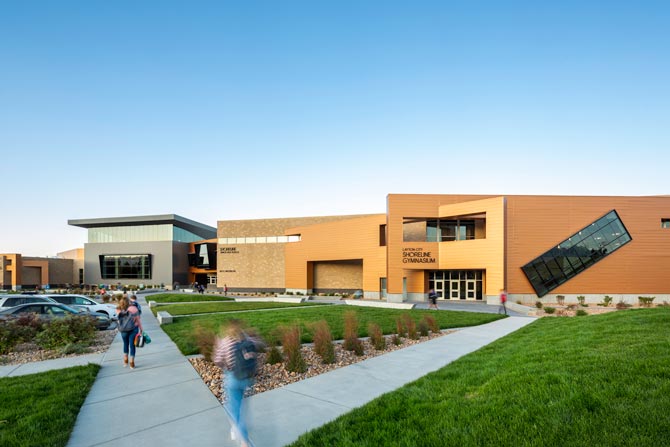
And now, every time I turn the corner and see Shoreline Junior High School in Layton, I get goosebumps. I think it’s beautiful. And it did not cost an arm and a leg. It was built within a reasonable budget for what school buildings cost.
One of the highlights of my career was in 2014 when I was inducted into the College of Fellows. That was just stunning to me. The first year, I didn’t make it. The second year, we tried it again. Jeanne and RK Stewart helped me, and I finally got that letter of acceptance. I took my daughters to the investiture in Atlanta. We had a grand weekend. We flew first class and had a limo take us to the hotel, and that just really lifted me up. One of the jurists told me that it was the best submission he’d seen. My daughter started crying; it was just such a great moment. I owe that to Jeanne; she dragged me along kicking and screaming. I believe I was the first school district architect to be admitted into the College of Fellows.
I look back and think I almost didn’t make it that one year I had to take off. I just didn’t know what else I was going to do if I didn’t make it. I just loved doing what I’ve done and met some of the best people.
Advice for younger architects?
You are going to love the business. It is so rewarding. You get to see what you imagine in your mind. Don’t be discouraged if you’re not the best designer in the office. There are lots and lots of jobs available for architects, so find what it is that you like to do. I kind of wish architecture schools introduced architects to all the different avenues available. I have not sat down at a drawing table since 1989, and I have loved it. I have loved doing what I’m doing and being able to work with the architects.