



I am who I am because of you
A place of remembrance and respect
A place that thrives over time
A place of inclusion
— “Japantown Design Strategy & Guidelines”
“We had a Japantown?” Valerie Nagasawa, principal at GSBS Architects, recalls the reaction some of her peers had when learning about Salt Lake City’s historic Japantown for the first time. Japantown was not a part of her youth; she was raised in Las Vegas and moved to Utah to attend the University of Utah. After meeting and later marrying Ralph Nagasawa, AIA, however, she came to understand Japantown’s deep significance in the life and history of his family and the broader Japanese American community in Salt Lake City. Her husband’s family owned one of the most well-known businesses in Japantown, the Sunrise Fish Market. That business and many others are no longer around, and memories of Japantown have faded into obscurity for many in Salt Lake City and Utah at large.
Japantown’s Rise
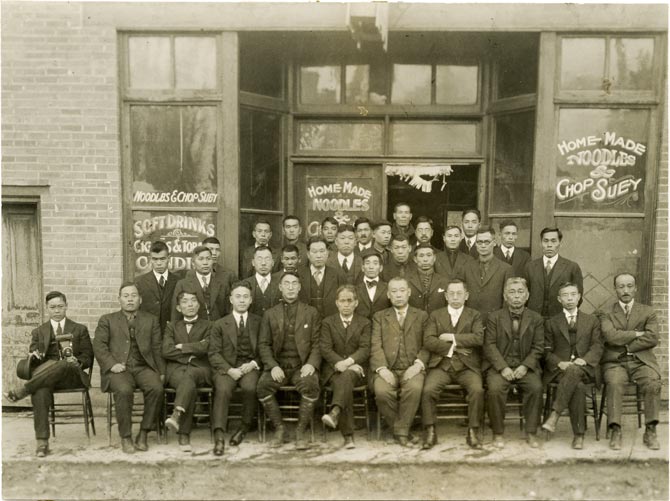
Japantown today occupies a single street at 100 South, named Japantown Street in 2007. At its peak, however, Japantown occupied nearly 10 city blocks and gave home to over 8,000 people.
The majority of Japanese immigrants arrived following the Chinese Exclusionary Act, passed in 1882. Serving as railroad workers, miners and agricultural workers, Japantown quickly grew in Salt Lake City’s West Side, alongside Plum Alley, Greektown, and other rich ethnic communities.
In 1942, President Roosevelt signed Executive Order 9066, forcing Japanese Americans to relocate to internment camps, including the Topaz War Relocation Center near Delta, Utah. When the center closed in 1945, the population of Japantown tripled as formerly interned Japanese Americans moved in. This resulted in Salt Lake City’s Japantown becoming one of the largest in the United States.
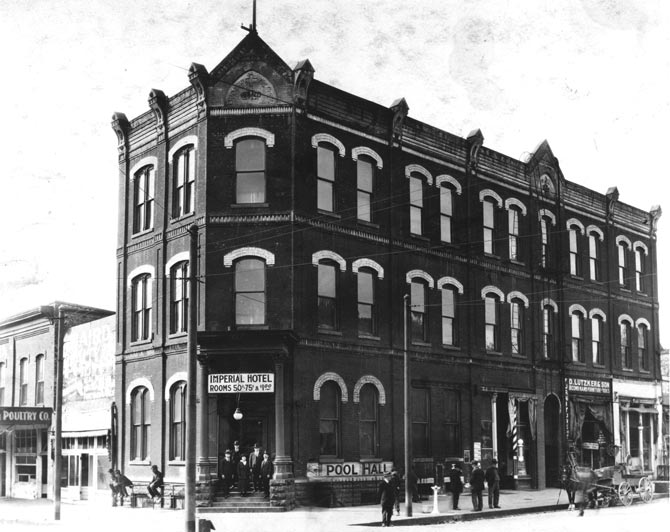
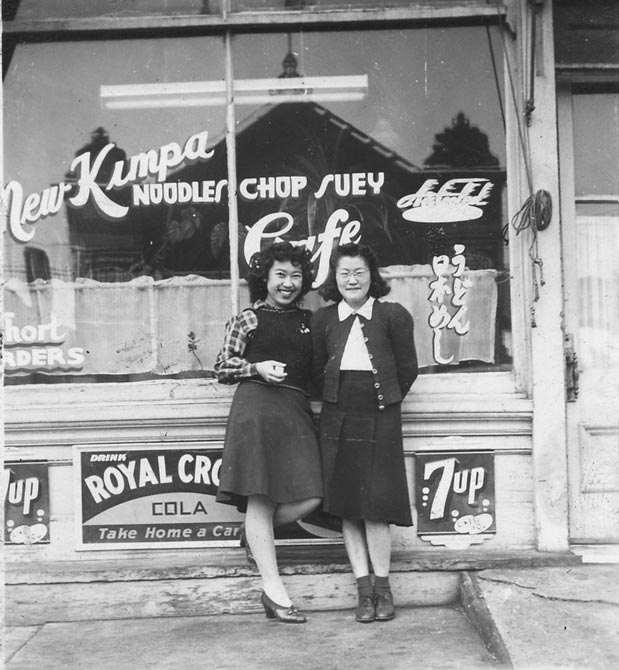
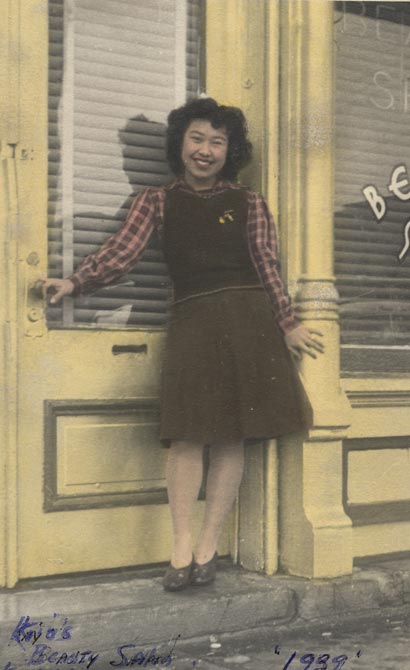
From 1907 to 1969, Japantown sprawled from State Street and 700 West to South Temple and 300 South, encompassing Japanese American homes, restaurants, stores, dance studios, a Japanese language school, two Japanese-language newspapers and more. Dawn Noodles, Utah Nippo and Aloha Cafe, the bilingual nature of Japantown, and the significance of having a shared cultural space still live in the memories of Japanese Americans who enjoyed a thriving Japantown.
A Historic Demolition
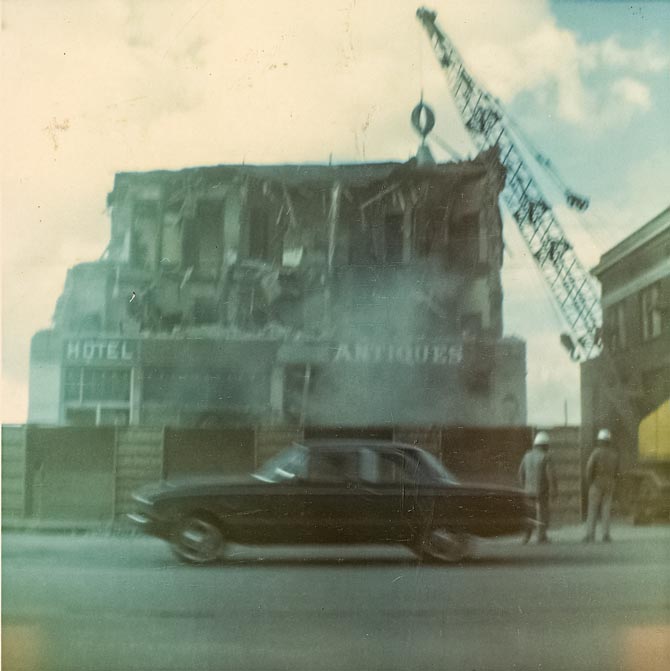
In 1969, over 90 Japanese businesses were forced to give up their livelihood by eminent domain as a massive part of Japantown was demolished and redeveloped for the Salt Palace sports arena.
Darin Mano, AIA, is a former Salt Lake City councilperson and licensed architect specializing in pro-housing policy and urban design. He says, “This is a piece of a national story. A lot of places we go to today used to be cultural districts. They were demolished during the same period for big sports or entertainment venues like Lincoln Center, Boston City Hall or Dodger Stadium, when they weren’t getting the tax increments that the cities wanted or needed. These are places that used to have cultural districts full of people; Salt Lake City is no different.”
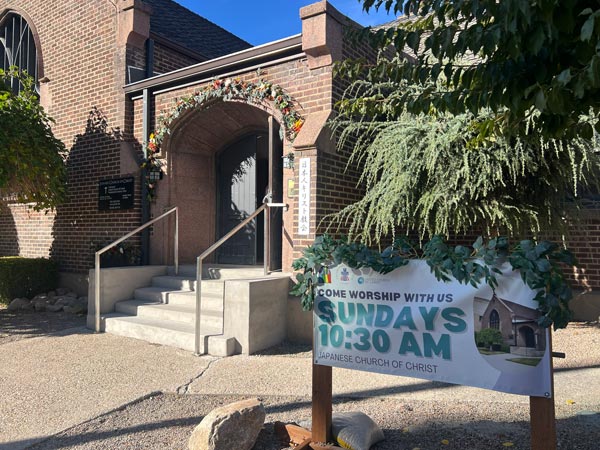
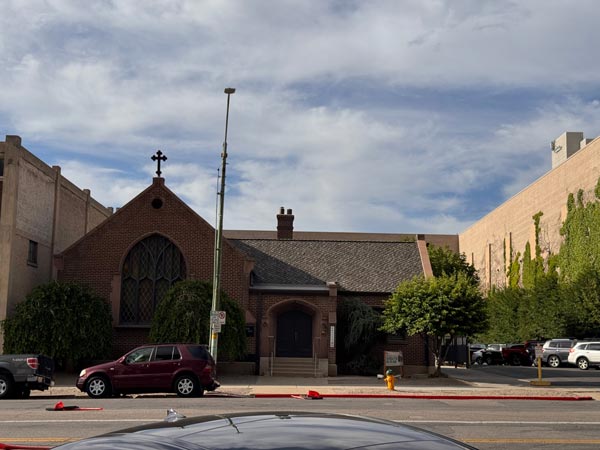
Built as part of a bid for the 1972 Winter Olympic Games, the Salt Palace and other developments divided the city, reducing Japantown to its single street and two remaining traces of history: the Japanese Church of Christ and the Salt Lake Buddhist Temple.
Current Preservation
The Japanese Church of Christ is a Late Gothic Revival building that was designed and constructed in 1924 by E. Chytraus. It was added to the National Register of Historic Places in 1982 and is cherished for its historicity. Somewhat ironically, the distinctly Mid-Century Modern Buddhist Temple was built in the early 1960s to replace an older building, just prior to the decimation of Japantown. In an attempt to assimilate into American culture, the structure was designed with a more “Protestant look,” featuring pews and a pulpit, unlike traditional Japanese temples.
Despite losing all of the Japanese-owned and operated businesses along the street, the two churches have continued their Japanese American legacy by hosting festivals on the street. Each year in mid-July, the street is closed for the Obon Festival, which will be celebrating its 90th anniversary this summer. It honors Japanese ancestors with dancing, taiko performances, lanterns, street food, yukata/kimono and Buddhist Temple Tours. Similarly, the street hosts the Spring Nihon Matsuri (festival), adding tea ceremonies, cosplay and cultural exhibits to the programming. The festivals are major fundraising activities for the churches and the Salt Lake Japanese American community, as they attract a broad spectrum of Salt Lake City’s residents and tourists.
Seeing Japantown Revitalized
For the Japanese Americans still living in Salt Lake City today, as well as those who still remember Japantown as more than just a single street, seeing Japantown revitalized is of utmost importance. Advocacy for preservation has been proceeding in stages since the early 2000s. Community leaders, including Jani Iwamoto and Judge Raymond Uno, formed the Japanese Community Preservation Committee. After more than 40 years of demolition, their goal was to preserve the surviving block of Japantown. Their efforts addressed the mounting problems of protecting the community in the face of encroaching development, difficulty parking and access to the downtown area, issues that continue to impact the operations of the two churches.
Despite the rising effort to preserve Japantown, the city expanded the Salt Palace Convention Center in 2006. This action raised community apprehension that the last remnants of Japantown would vanish.
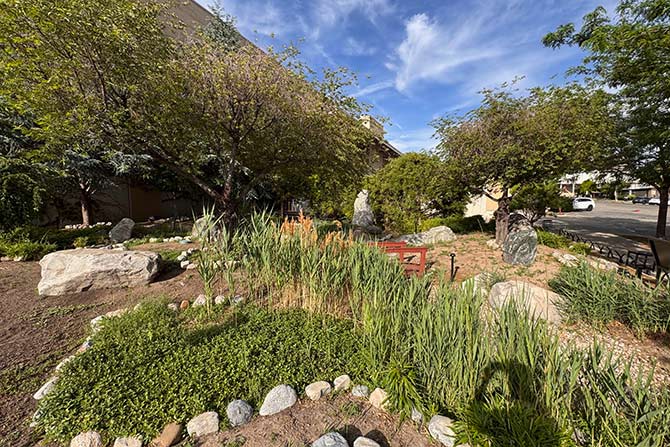
Though the Salt Palace remains, Salt Lake City’s Japanese American presence leaves its handprint on its design. As a tribute and memorial to the Japanese community that lived and worked on 100 South for generations, a garden designed by University of Utah professor Gordon Hashimoto on the west side of the Convention Center provides a buffer between the Salt Palace loading docks and the Japanese Church of Christ. The garden honors both the Issei, first-generation Japanese immigrants, and the Nisei, their American-born offspring. The garden also displays a plaque that honors the WWII Nisei Soldiers who embodied the “Go For Broke” spirit. The compact garden utilizes spaces, wind, water and part of a building to display a compact view of Japanese landscape, art, traditions and symbolism.
Unity and Progress
In 2018, spurred by news of the large Westside Development Plan (SLC Block 67), Japantown activists, again, voiced their concerns that what remains of the historic corridor was threatened. The Salt Lake City Redevelopment Agency facilitated discussions between the community and the developer and, in 2019, engaged GSBS Architects to begin a formal Japantown visioning process with the community to address their concerns and create a plan for the future of Japantown Street.
The resultant document, “Japantown Design Strategy & Guidelines,” reflects the participants’ priorities, as developed through a guided, 15-month community engagement process. Stakeholders included members of the Japanese American community, as well as area landowners and their representatives, including private and public interests. GSBS Architects and the Salt Lake City RDA oversaw the process.
These participants created a vision statement for the project:
“I am who I am because of you”
A place of remembrance and respect
A place that thrives over time
A place of inclusion
The design guideposts were to establish:
- A place of vibrancy that provides elements that attract people to the area and support commerce
- A place of generations, using contemporary and historical design elements that create spaces for festivals and activities for all ages
- A place of gathering; a safe street for events that showcase Japanese and Japanese American culture and arts
- A place of senses: it includes sights and sounds, textures and smells evocative of the Japanese experience
- A place of intrinsic beauty
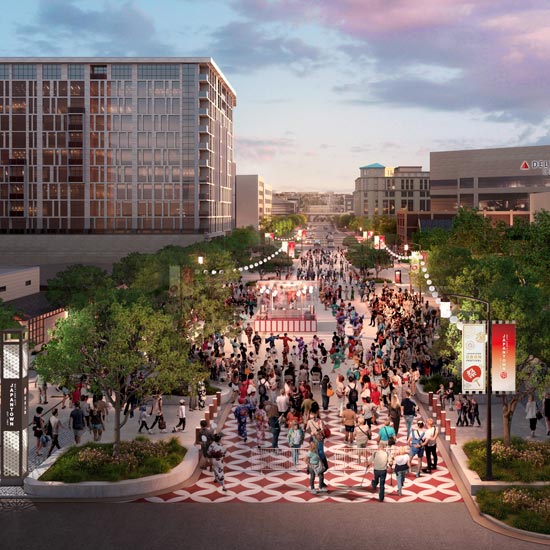
The consultants developed three design concepts for the public right-of-way for the participants to review. The options considered not just aesthetic and design ideas to improve the pedestrian environment and create a sense of place, but also incorporated the critical components of pedestrian and visitor safety, preserving existing on-street parking, accommodating current festivals, and meeting Salt Palace needs for dock access and fire lane access. The community provided feedback and chose a concept that best realizes the vision and design guideposts, addressing functional needs and accommodating daily as well as festival use.
Though revitalization focuses on the Japanese American community in Salt Lake City, the success of this revitalization strategy has a greater impact. Valerie Nagasawa says, “It’s a great vision, not just for the community, but for the entire city.” Healthy, diverse communities enrich cities across the U.S., drawing intrigue, commerce and activity, both profoundly and passively beneficial to all.
Driving Toward Action
The “Japantown Design Strategy & Guidelines” was completed in Spring 2021 and remains visionary, pending funding and the renovation of the Salt Palace, implementation of the Westside Plan, and the massive Smith Entertainment Group-led Sports and Entertainment District. The community is committed to working with the city, county and private developers to find financial and political support for this substantial effort to preserve and improve what is left of the cultural district. In 2023, the Utah Japantown Advocates was formed as a non-profit to host town halls, collect oral histories and engage with the city council to ensure that the community’s positions are presented in light of ongoing development decisions surrounding the street.
“It’s not just the physical street in the center of the city; they are representing the history that is bigger than either church, or even bigger than Salt Lake City, if we think of urban renewal across the country. There is a lot of weight on this project. There is so much potential for good,” says Darin Mano.
Since 2024, community members have pushed not just for preservation and street improvements, but for an actual cultural revival with Japanese businesses, restaurants, art and public spaces. Marisa Eng, who represents the Utah Japantown Advocates, said that they are taking inspiration from the vibrancy in areas like Little Tokyo in Los Angeles and Japantown in San Jose and San Francisco, which are supported by density and patronage. They are hoping to learn from and share experiences with those communities.
Where Things Stand as of May 2026
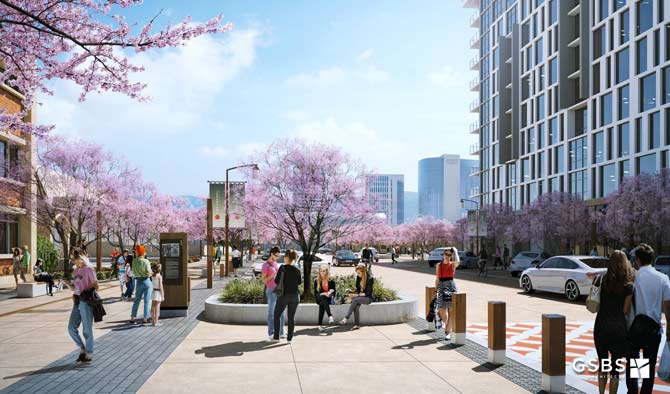
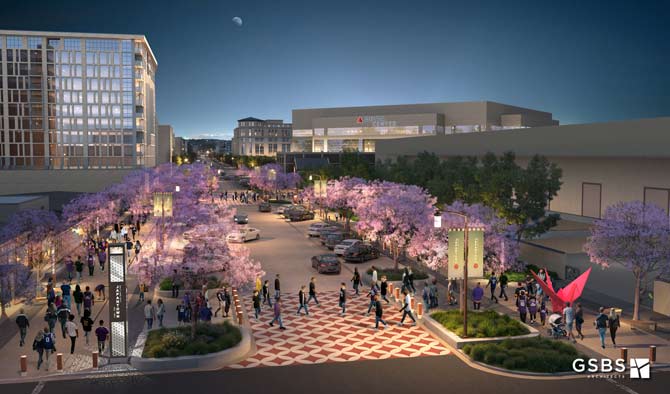
Working with the Salt Lake City CRA (formerly the RDA) and representative committees of the Japanese Church of Christ, and the Salt Lake Buddhist Temple, GSBS developed the street design concept and placemaking strategy to 40% completion over the course of 2025. The developed design was presented to the CRA Board in November.
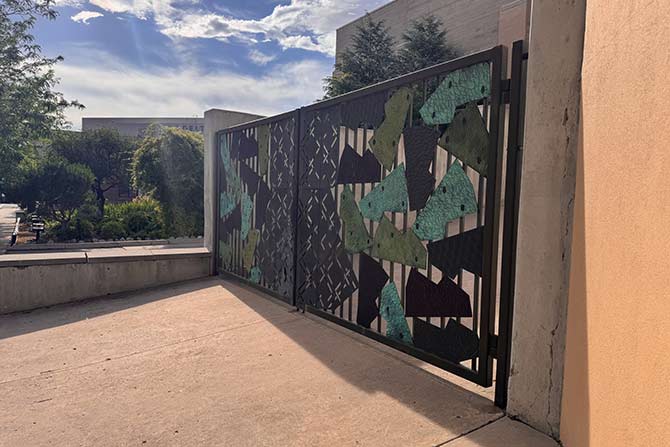
Planned improvements — wider pedestrian areas, landscaping, lighting, cultural markers, gathering spaces and historical storytelling elements — are temporarily paused, tied to uncertainty and coordination around the much larger downtown redevelopment effort involving the Salt Palace, Delta Center district and convention/sports district plans.
The city describes the project as a phased implementation expected to unfold over years rather than one immediate buildout. The estimated total cost is just over $11 million.
A large community-informed mural by artist Cole Eisenhour is scheduled for installation in summer 2026 on the Multi-Ethnic Senior Highrise wall overlooking Japantown. The mural is being framed as the “first visible phase” of implementation.
“Where Salt Lake City could really stand out is if we could actually revitalize Japantown,” says Darin Mono. “There are still some elements of that community there, and the public went and invested in that district and were able to bring back a future-facing Japantown. I don’t know of any other community where urban renewal happened like that.”
Clearly, a revitalized Japantown is a tall order. As Valerie Nagasawa says, “The people who are called upon to lead this effort have a big weight to bear to continue the legacy of the street. They are small churches and advocacy organizations. Fortunately, the momentum and support have really grown. If any part of this can happen soon, it will be a win.”
Historic photos courtesy of the Mitsugi M. Masai Memorial Japanese American Archive, Special Collections, J. Willard Marriott Library, University of Utah